The verdict
Hall wrote this at 27, self-published it, and tried to put every secret tradition on Earth into one book. It is less a history than a symbol dictionary: the Egyptian, Greek, Hebrew, Christian and alchemical pictures, each read as a code for the same hidden teaching. Read it for the images and the ideas behind them, not for the dates.
The one idea running through all of it
Hall claims every religion and secret society guards the same core teaching, dressed in local myths and symbols.
The human body is a small copy of the universe. Know one and you can read the other.
Myths, numbers, pictures and rituals are coded instructions for waking up the soul, meant for those ready to read them.
Map of the book
Introduction
Every Great Philosophy Hid a Secret at Its Core
The big ideaHall argues that Western philosophy descends from ancient Mystery schools that preserved a secret esoteric doctrine through symbols, allegory, and ritual.
Hall opens with a panoramic survey of Western philosophy, from Thales and the seven Greek sages through Plato, Aristotle, the Stoics, and Epicureans, up through Scholasticism, the German Idealists, and American Pragmatism. He catalogs over thirty named schools not to endorse any single one, but to show that no system has satisfactorily explained the deepest questions. He notes that modern philosophy has drifted toward materialism, losing the spiritual orientation that once gave it purpose. He quotes Bacon: a little philosophy leads to atheism, but depth in philosophy leads back to religion.
Hall then makes his central argument: Greek philosophy did not originate in Greece. He claims Thales, Pythagoras, and Plato all traveled to Egypt, Chaldea, and the Orient and brought back the learning of those civilizations. The true source of philosophical wisdom, Hall argues, was the Mystery schools: secret fraternities that bound their members to silence under pain of death and communicated their deepest teachings only to initiated priests through symbol, allegory, and ritual. He says symbolism is the universal language of Nature itself, and that a single symbol can simultaneously reveal truth to the wise while hiding it from the ignorant.
Hall closes by stating the book's purpose. He argues that a Great Arcanum (secret doctrine) has been preserved intact by a small band of initiated minds since the beginning of the world. The keys to that doctrine are encoded in monuments, mythologies, temple dimensions, and the rituals of the Mysteries. He says those who can find the lost keys today may open a treasure house of philosophic, scientific, and religious truths.
“In a single figure a symbol may both reveal and conceal, for to the wise the subject of the symbol is obvious, while to the ignorant the figure remains inscrutable.”
on the dual function of symbolic language
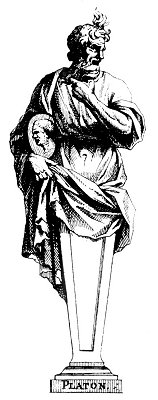
Key ideas
- Hall surveys over thirty named schools, from Thales (546 BC) to Bergson and William James.
- Hall claims Egypt, Chaldea, and India, not Greece, are the true original source of philosophy.
- The Mysteries were secret fraternities that required silence oaths and punished betrayal with death.
- Symbolism is the universal language; one figure can reveal truth to the wise and hide it from others.
- Hall argues a Great Arcanum has been preserved by initiated minds since the world's beginning.
- IOriental MysteriesEgypt, Chaldea, India held the original secret doctrine
- IIGreek InitiationPlato, Pythagoras traveled east and brought back the lore
- IIIPublic PhilosophyMystery wisdom encoded in the named schools
- IVSymbolismSecret preserved as allegory, myth, and temple geometry
- VThe Great ArcanumA small band of initiates kept the doctrine intact
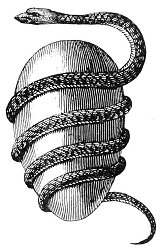
The Ancient Mysteries and Secret Societies Which Have Influenced Modern Masonic Symbolism
How Secret Initiations Shaped Religion Across the Ages
The big ideaHall argues that ancient Mystery schools, from the Druids to the Mithraists, preserved the same esoteric wisdom through graded initiations and directly shaped both Freemasonry and early Christianity.
Hall opens by dividing humanity into two groups: the few who think deeply and the many who need simple guidance. He argues this split explains why all ancient civilizations maintained a two-tier religious system. Public temples offered exoteric worship and simple moral codes. Behind them, secret fraternities called the Mysteries taught the philosophic elect an esoteric doctrine. Hall quotes Robert Macoy, 33 degrees, who argues that all advances in ancient civilization, philosophy, science, and art came from institutions operating under the veil of mystery.
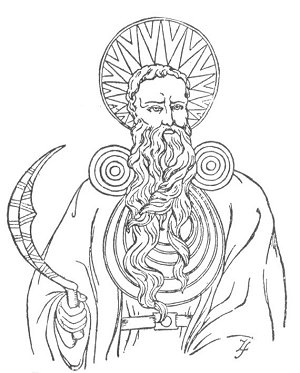
Hall then examines the Druidic Mysteries of Britain and Gaul in detail. He says the Druidic Order had three grades: the Ovate (green robe), the Bard (blue robe, who memorized up to twenty thousand verses of sacred poetry), and the Druid (white robe, responsible for religious ministry). Above these stood the Arch-Druid, identified by a golden scepter and a breastplate that Hall says strangled any person who made an untrue statement while wearing it. The hardest Druidic initiation test was being set adrift alone at sea in an open boat. Those who survived were said to be born again.
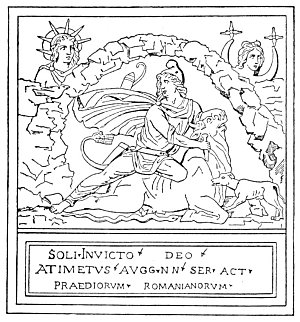
The second school Hall covers is the Persian Rites of Mithras, which Roman legions carried across Europe. Hall lists a dozen elements shared by Mithraism and early Christianity, including birth on December 25, the use of bell and candle, holy water, and Sunday worship. He also argues that the Masonic symbols of the Lion and the Grip of the Lion's Paw have Mithraic roots, and that a seven-rung initiation ladder in the Mithraic rites is the ancestor of the seven-rung ladder in Masonic ritual.
“The Mysteries were organized for the purpose of assisting the struggling human creature to reawaken the spiritual powers which, surrounded by the flaming ring of lust and degeneracy, lay asleep within his soul.”
on the purpose of initiation rites
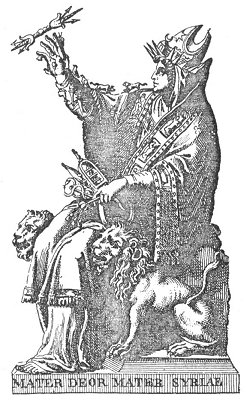
Key ideas
- Ancient societies split knowledge: esoteric doctrine for initiates, exoteric myths for the public.
- Druidic Order had three degrees: Ovate (green), Bard (blue), Druid (white), plus Arch-Druid.
- Arch-Druid's breastplate of judgment supposedly strangled anyone who lied while wearing it.
- Mithras cult spread via Roman legions to nearly all of Europe by the first century AD.
- Hall lists twelve shared elements between Mithraism and early Christianity, including Sunday worship.
- Masonic Lion and Grip of the Lion's Paw trace, Hall argues, directly to Mithraic initiation rites.
- IOvate (Ovydd)Green robe; entry level; medicine, astronomy, poetry
- IIBard (Beirdd)Blue robe; memorized 20,000 verses of sacred poetry
- IIIDruid (Derwyddon)White robe; religious ministry to the people
- IVArch-DruidGolden scepter; oak-leaf crown; six higher degrees required
The Ancient Mysteries and Secret Societies, Part Two
Gnosticism, Serapis, and the Norse initiation rites
The big ideaHall argues that Gnosticism, the Egyptian Serapis cult, and the Nordic Odinic Mysteries each used death-and-resurrection drama to encode the same hidden teaching: divine knowledge descends through opposing forces, and only initiation can reverse the fall.
Hall opens with Gnosticism, a movement he says blended early Christian teaching with pagan symbolism. He claims Simon Magus may have founded it, teaching that reality springs from two forces: a male creative Mind and a female Thought, meeting in a middle substance called the pleroma. The lesser creator god, the Demiurgus, emerges from this pleroma and builds the physical world. The Alexandrian teacher Basilides gave the supreme deity the name Abraxas, whose letters add up to 365, the number of cosmic Aeons he taught. Valentinus later expanded the system to thirty pairs of divine beings. Hall notes that several Gnostic ideas survived inside standard Christian doctrine.
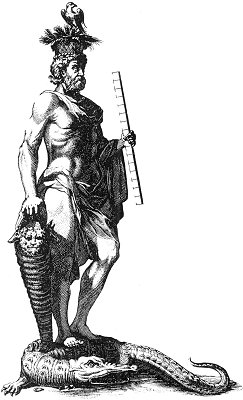
Hall then turns to Serapis, a mysterious Egyptian-Greek god whose true nature, he says, only the initiated priests understood. Proposed meanings of the name range from 'tomb of the bull' to 'the power that disposed the universe into its present beautiful order.' Hall argues that the face of Serapis was almost certainly the model for the first portraits of Jesus, citing the art historian C. W. King. The Serapeum at Alexandria housed a colossal statue until Christian soldiers destroyed it in AD 385 on orders from Emperor Theodosius.
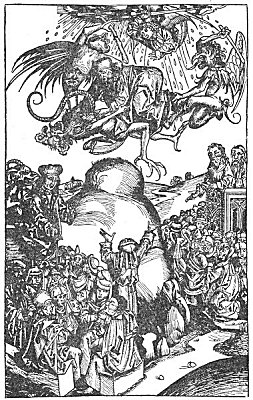
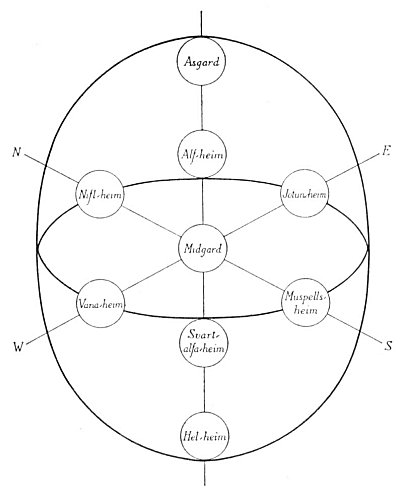
Hall closes with the Nordic Odinic Mysteries, whose nine-chamber initiations were built around the death of Balder the Beautiful, the Scandinavian equivalent of Christ. Twelve priests called Drottars presided. The candidate unknowingly played Balder himself, passing through nine underground worlds before being declared raised again without passing through the gates of death.
“There can be no doubt that the head of Serapis, marked as the face is by a grave and pensive majesty, supplied the first idea for the conventional portraits of the Saviour.”
C. W. King on Serapis as prototype of Christ
Key ideas
- Abraxas: letters of the name sum to 365, equaling the number of cosmic Aeons
- Simon Magus taught three male-female pairs of divine forces called Syzygies
- Serapis carried a seven-letter name; priests sang seven vowels in his honor
- Emperor Hadrian wrote that Serapis-worshipers and Christians were the same people
- Balder the Beautiful died by a mistletoe arrow guided by Loki, directed at blind Hothr
- Nine underground chambers in Odinic rites mapped the nine worlds of the universe
The Ancient Mysteries and Secret Societies, Part Three
Eleusis, Orpheus, and the Bacchic resurrection rite
The big ideaHall argues that the Eleusinian, Orphic, and Bacchic Mysteries each staged the same philosophical truth: the human soul is a divine spark trapped in matter, and ritual initiation is the path to recovering its freedom.
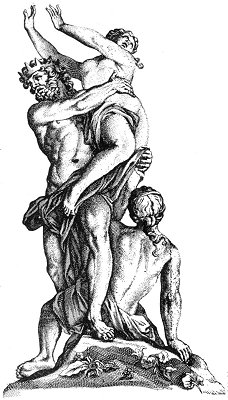
Hall opens with the Eleusinian Mysteries, which he calls the most famous of the ancient rites. He says they were founded by Eumolpos around 1400 BC and divided into two degrees. The Lesser Mysteries, dedicated to Persephone, used her abduction by Pluto as a symbol for the soul captured in matter. Hall states that initiates were taught that dying without spiritual growth means wandering Hades forever, and that physical birth is actually a kind of death. The grade awarded for completing this degree was called Mystes, meaning one who sees through a veil.
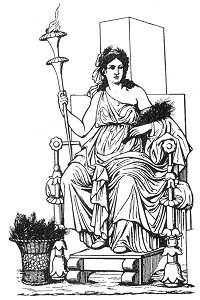
The Greater Mysteries centered on Ceres searching for her lost daughter with two torches: intuition and reason. Hall says the successful candidate was given the title Epoptes, meaning one who has seen directly, and received secret books written in cipher. He notes that women and children were admitted, Socrates refused membership to keep his speech free, and the rites survived until Emperor Theodosius destroyed them around 400 AD.
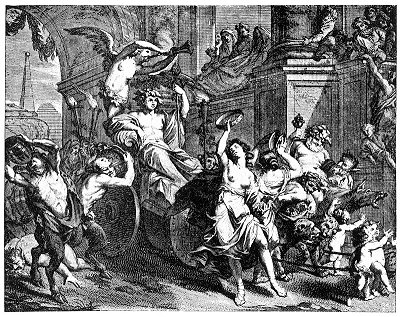
Hall then covers the Orphic and Bacchic Mysteries. Orpheus, he says, was the founder of Greek theology, and the story of Eurydice represents humanity imprisoned in ignorance. The Bacchic myth is more elaborate: Bacchus was the rational soul of the world, dismembered by Titans who tricked him with a mirror. Humans were made from the Titans' ashes, so every person carries a fragment of the Bacchic nature. The Bacchic Mysteries existed to reassemble those fragments and restore Bacchus to wholeness.
“An ancient initiate once said that the living are ruled by the dead.”
Eleusinian doctrine on the soul governed by animal nature
Key ideas
- Eleusinian Lesser Mysteries: Persephone's abduction symbolizes the soul entering matter
- Mystes and Epoptes: the two Eleusinian grades, veiled vision then direct sight
- Orpheus: founder of Greek theology, said to be son of Apollo and the Muse Calliope
- Bacchus dismembered by Titans after being lured by his own reflection in a mirror
- Human race formed from Titan ashes containing fragments of Bacchus' body
- Dionysiac Architects: a secret builders' society, said to have worked on Solomon's Temple
- 1Bacchus whole rational soul of the world, undivided
- 2Mirror trap Titans lure him with his own reflection
- 3Dismemberment rational soul scattered through creation
- 4Boiled in water soul immersed in and bound to matter
- 5Roasted spirit begins to rise out of material form
- 6Heart saved Pallas preserves the immortal center
- 7Titan ashes Jupiter makes humans; each carries Bacchic spark
- 8Bacchic rites Mysteries gather the scattered parts again
- 9Resurrection rational soul restored to wholeness
Atlantis and the Gods of Antiquity
The drowned continent behind every dying-god myth
The big ideaHall argues that Atlantis was both a real sunken continent and a philosophical allegory for the soul's fall into matter, and that its mystery religion seeded every dying-god myth in the ancient world.
Hall opens with Pierre Termier, a French geologist who in 1912 told the Institut Oceanographique that science was slowly accepting the idea of a sunken Atlantic continent. Hall then follows Plato's Critias: Poseidon ruled Atlantis, fathered ten sons, and built a capital of concentric rings, gold-covered temples, and a code of law engraved on a pillar of orichalch. When the kings grew corrupt, Zeus called a divine council. Plato's account breaks off there. The Timaeus adds that earthquakes and floods sank the island in a single night around 9600 B.C.
Hall argues the story is both historical and allegorical. He says the ten Atlantean kings represent the Pythagorean tetractys, the numbers one through ten. The sinking of Atlantis, he claims, encodes the same truth as the biblical Fall of Man: the soul's descent from spirit into matter. Atlantean priests, he says, survived the disaster and carried their mystery wisdom to Egypt and Central America, where they built pyramids and planted the symbols of the cross and the serpent.
The chapter's second half surveys the dying-god myth. Hall traces it through Tammuz and Ishtar in Babylon, Adonis in Phoenicia (born December 24, killed by a wild boar, risen after three days), and Atys in Phrygia (same birth date, same resurrection cycle, and origin of the Christmas tree). Hall connects all of these rites to the Cabiric Mysteries of Samothrace and to Odin hanging on the World Tree. He concludes that every dying-god story encodes one philosophical truth: the soul's temporary death as it enters matter, and its liberation through initiation.
“The myth of the dying god is the key to both universal and individual redemption and regeneration, and those who do not comprehend the true nature of this supreme allegory are not privileged to consider themselves either wise or truly religious.”
Hall's closing verdict on the dying-god allegory
Key ideas
- Termier in 1912 cited dredged lava at 3,000 meters and volcanic Atlantic islands as evidence for a sunken continent
- Plato's 10 Atlantean kings ruled from concentric rings of land and water around a central temple to Poseidon
- Hall equates the 10 kings with the Pythagorean tetractys (numbers 1-10), and Atlantis's sinking with the soul's descent into matter
- Adonis and Atys were both born December 24, killed, and risen after three days -- Hall traces Christmas tree symbolism to Atys
- Cabiric Mysteries of Samothrace enacted death and resurrection of a murdered brother Cashmala in three degrees
- Odin hung nine nights from the World Tree, pierced by a spear, and gained the runes: wisdom through voluntary suffering
- 1Divine Birth God born at winter solstice, December 24
- 2Life Among Men Teaching, shepherding, saving role
- 3Violent Death Slain by boar, enemy, or self-sacrifice
- 4Mourning Ritual lamentation by devoted followers
- 5Resurrection Risen after three days or three months
- 6Initiation Neophytes symbolically die and are raised
The Life and Teachings of Thoth Hermes Trismegistus
Egypt's scribe-god and the seven-rung ladder to immortality
The big ideaHall argues that Hermes Trismegistus was both a historical sage and the embodiment of divine mind, whose Vision of Poimandres set out a complete cosmogony and a practical map for the soul's return to God through seven planetary spheres.
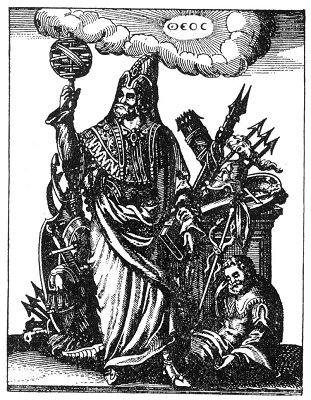
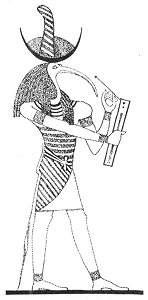
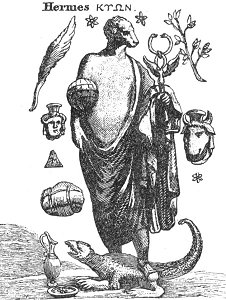
Hall describes Hermes (Thoth in Egypt) as the greatest philosopher, priest, and king of antiquity. Ancient sources credit him with 20,000 to 36,000 books covering medicine, chemistry, law, mathematics, geometry, and magic. Hall follows Clement of Alexandria's account of the 42 books of Hermes, which organized all Egyptian priestly knowledge: hymns, astronomy, law, geography, medicine, and ritual. Most were destroyed in the burning of Alexandria, Hall says, because the Romans and later the Christians understood that while those books survived, Egypt could not be brought under their control.
Hall then describes the Book of Thoth, kept in a golden box in the temple's innermost sanctuary. He says this book held the secret processes for stimulating the brain so that consciousness could perceive immortal beings -- the key to human regeneration. Hall claims the book still exists in secret and may be the Tarot of the Bohemians, a set of 78 symbolic leaves carried by gypsies who, in this telling, were originally Egyptian priests driven from the Serapeum.
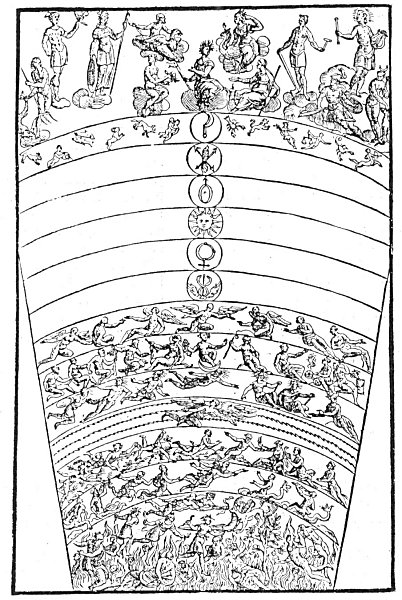
The chapter's centerpiece is the Vision of Poimandres. Hermes encounters the Great Dragon, which reveals itself as the Universal Mind. Hall describes creation: Light and Darkness separate, the Word rises as a pillar of flame, a Second Mind forms Seven Governors, and a heavenly Man falls in love with his shadow and descends into matter. At death, the soul climbs seven planetary rings, surrendering a vice at each -- lust to Venus, ambition to the Sun, falsehood to Saturn -- until it reaches the Eighth Sphere of fixed stars, absorbed into Light.
“The path to immortality is hard, and only a few find it. The rest await the Great Day when the wheels of the universe shall be stopped and the immortal sparks shall escape from the sheaths of substance.”
Poimandres on the rarity of spiritual liberation
Key ideas
- Iamblichus credited Hermes with 20,000 books; Manetho with 36,000; Hall treats both as pointing to a single divine figure
- Clement described 42 books of Hermes organizing Egyptian priestly ranks: Singer, Astrologer, Scribe, Stole-keeper, and Prophet
- The Book of Thoth, locked in a golden box by the Master of the Mysteries, Hall identifies as possibly the 78-card Tarot
- Poimandres: the Word formed Seven Governors (Moon, Mercury, Venus, Sun, Mars, Jupiter, Saturn) whose orbits bind Destiny
- The heavenly Man fell into matter by loving his own shadow reflected on the earth and in the waters
- Soul's ascent: each of the seven planetary rings takes back its own vice before the soul reaches the Eighth Sphere of freedom
- IDeathBody returns to elements; soul begins ascent
- IIMoon: Ring 1Returns ability to increase and diminish
- IIIMercury: Ring 2Returns deceit and craftiness
- IVVenus: Ring 3Returns lusts and passions
- VSun: Ring 4Returns ambitions
- VIMars: Ring 5Returns rashness and profane boldness
- VIIJupiter: Ring 6Returns sense of accumulation and riches
- VIIISaturn: Ring 7Returns falsehood and evil plotting
- IXEighth SphereSoul freed, sings praises, absorbed into Light
The Initiation of the Pyramid
Egypt's Great Pyramid was a temple of initiation
The big ideaHall argues that the Great Pyramid was not a royal tomb but the first temple of the ancient Mysteries, where prepared initiates underwent a spiritual second birth.
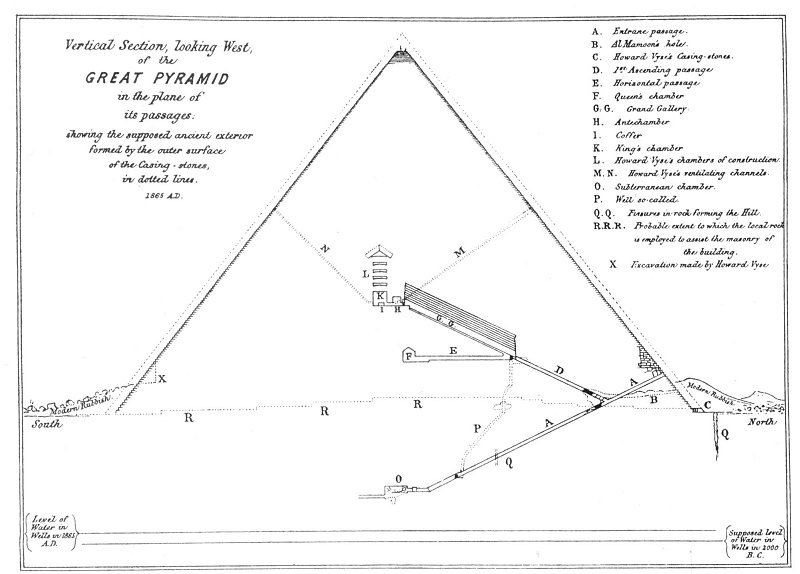
Hall argues the Great Pyramid at Gizeh was never a royal tomb. It lacks the carved inscriptions, paintings, and royal cartouches found in every other Egyptian burial site. Hall notes that Herodotus, the main source for the tomb theory, was likely a Mystery initiate who deliberately hid the pyramid's true purpose. The only markings inside are rough builders' marks, not royal records. Several ancient historians, including Manetho and Diodorus, disagreed with Herodotus about who built it and why.
Hall describes the pyramid as a sacred initiation temple. The King's Chamber, he says, was the site of the second death: a rite where the candidate lay in the granite coffer while his soul left the body and traveled through higher worlds. A mysterious figure Hall calls the Master of the Hidden House dwelled in the pyramid and received only those who had passed every test. Hall connects the pyramid's geometry to cosmic numbers: the four base sides represent the four elements, and the twelve lines of the triangular faces encode the twelve signs of the zodiac.
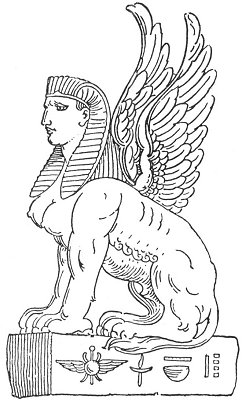
Hall describes the Sphinx as androgynous and symbolic of Nature's riddle. He closes by declaring that when the pyramid's secrets are recovered, the ancient Mysteries will rise again. He calls the Great Pyramid not a tomb but the gateway to the Eternal.
“Through the mystic passageways and chambers of the Great Pyramid passed the illumined of antiquity. They entered its portals as men; they came forth as gods.”
on the pyramid as initiation chamber
Key ideas
- Hall argues the Great Pyramid was never a tomb; it lacks Egyptian inscriptions and royal decoration
- The King's Chamber held the rite of the second death: the candidate lay in the granite coffer
- A figure called the Master of Masters dwelled in the hidden chambers and was seen only by initiates
- Pyramid geometry encodes cosmic numbers: 12 zodiac lines in the four triangle faces
- The Sphinx is 200 feet long, androgynous, and Hall says was not the portal to the pyramid
- Hall says Herodotus was a Mystery initiate who deliberately concealed the pyramid's true history
- ISubterranean ChamberEntry point; base ordeals for the candidate
- IIQueen's ChamberSecond stage; hidden niche, still unexplained
- IIIGrand GalleryRising passage; 157 feet long, 28 feet high
- IVKing's ChamberFinal rite: second death in the granite coffer
Isis, the Virgin of the World
The World Mother encodes all of Nature and alchemy
The big ideaHall argues that Isis is not merely a goddess but the universal symbol of Nature itself, and that her elaborate iconography encodes the principles of Hermetic alchemy and the path to spiritual regeneration.
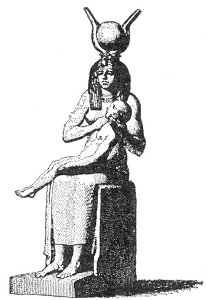
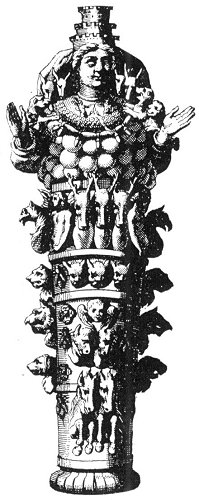
Hall opens by describing Isis as the supreme symbol of Nature, a goddess known by ten thousand names who appears in nearly every ancient religion. He traces her name through multiple languages: wisdom in Greek, water in its passive state in Gothic, and to save in Hebrew. Hall says Christianity transformed Isis into the Virgin Mary, because both figures gave birth to a divine solar son while remaining virgins. Apuleius, he notes, recorded Isis naming herself as Pessinuntica, Minerva, Venus, Diana, Proserpine, Ceres, Juno, and finally Queen Isis.
Hall recounts the myth of Osiris, Isis, and Typhon. Osiris, the sun god, is tricked by 72 conspirators led by Typhon and sealed in a decorated chest on the 17th day of the month Athyr, when the sun was in Scorpio. Isis recovers the body but Typhon dismembers it into 14 parts and scatters them across the earth. Isis finds only 13; she recreates the missing 14th piece in gold. Hall reads this as an allegory of solar energy, generation, and the death and resurrection of spirit in matter.
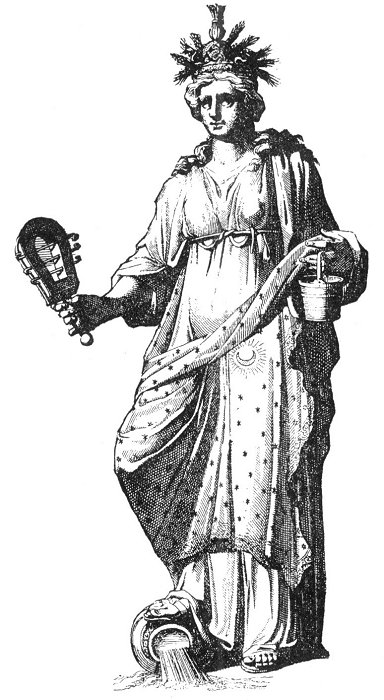
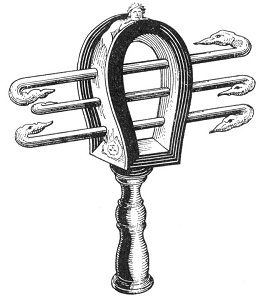
Hall devotes much of the chapter to the symbolic meaning of Isis' attributes: her black robe stands for the moon receiving light from the sun; the sistrum's rods represent the four elements; the crown of gold with snakes symbolizes solar fire purified through seven planetary cycles. He also covers mummification, arguing it was a practice reserved for initiates who had passed the tests of the Mysteries, preventing their reincarnation.
“As wisdom personified, Isis stands between the pillars of opposites, demonstrating that understanding is always found at the point of equilibrium and that truth is often crucified between the two thieves of apparent contradiction.”
Isis between the Masonic pillars of Jachin and Boaz
Key ideas
- Isis has ten thousand names across all ancient religions; Hall says she was transformed into the Virgin Mary
- Osiris is tricked by 72 conspirators on the 17th day of Athyr when the sun is in Scorpio
- Typhon dismembers Osiris into 14 parts; Isis recovers 13 and recreates the 14th in gold
- The sistrum's three rods represent the four elements operating within the sphere of the moon
- Hall says mummification was reserved for initiates only; it prevented reincarnation for the worthy
- Isis stands in the constellation of Virgo, holding a sheaf of grain and the young Sun God
- 1Osiris rules Egypt The sun god spreads knowledge and light
- 2Typhon's conspiracy 72 plotters trick Osiris into a chest
- 3Chest cast into the Nile Floats to Byblos; sealed with molten lead
- 4Isis searches Finds the chest grown into a palace pillar
- 5Second dismemberment Typhon cuts body into 14 scattered parts
- 6Isis reassembles Finds 13; recreates the 14th part in gold
- 7Horus avenges Son of Osiris slays Typhon; cycle completes
The Sun, A Universal Deity
Ancient gods are all names for the one solar fire
The big ideaHall argues that every major deity of the ancient world was a personification of the sun, and that the core doctrines of Christianity, including the Trinity, the virgin birth, and the December 25 birthday, were derived from solar mythology.
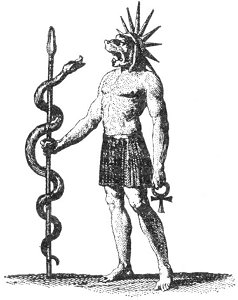
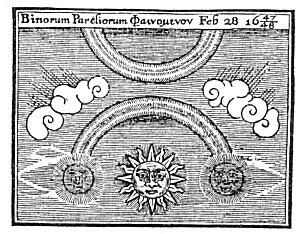
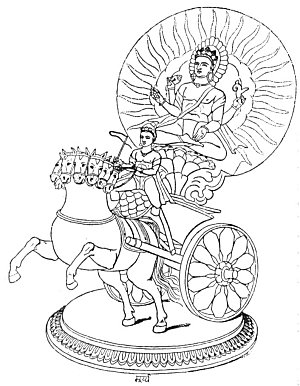
Hall opens by citing Albert Pike's claim that Brahma, Mithras, Osiris, Apollo, Adonis, Bel, and Adonai were all personifications of the regenerating sun. Hall traces sun worship through mounds, ziggurats, and stone circles on every continent. He argues that the Christian Trinity arose directly from the three daily phases of the sun: God the Father is the blue mist of dawn, God the Son is the golden noon, and the Holy Ghost is the flaming red sunset that descends into darkness before rising again.
Hall presents Jesus as a solar figure assembled from the attributes of Apollo, Osiris, Orpheus, Mithras, and Bacchus. He notes that December 25 was the Roman birthday of Sol Invictus before it became Christmas, and he cites scholars who trace the Feast of the Assumption to the sun entering the constellation Virgo in mid-August. He also identifies the three Magi as the three stars in the sword belt of Orion. Hall says the Christian church follows ancient solar customs without understanding their origin.
Hall describes a doctrine of three suns within every solar system: the spiritual sun (Vulcan), the soular or intellectual sun (Christ and Lucifer), and the visible material sun (Jehovah). These correspond to the three centers of life in the human body: the brain, the heart, and the generative system. He closes with a discussion of seven primary solar colors and their therapeutic and symbolic correspondences.
“There is an earthly sun, which is the cause of all heat, and all who are able to see may see the sun; and those who are blind and cannot see him may feel his heat.”
Paracelsus, quoted by Hall, on visible and eternal suns

Key ideas
- Brahma, Mithras, Osiris, Apollo, Bel, and Adonis are all solar deities with the same underlying myth
- The Christian Trinity comes from three solar phases: Father (dawn, blue), Son (noon, gold), Holy Ghost (sunset, red)
- December 25 was the Roman birthday of Sol Invictus long before it became Christmas
- Three suns exist in each solar system: spiritual (Vulcan), soular (Christ/Lucifer), material (Jehovah)
- The 12 labors of Hercules correspond to the 12 zodiac signs the sun passes through each year
- Hall says there are 7 primary colors, not 3; the human eye can perceive only 3 of them
- IDawn: God the FatherBlue mist; Creator; beginning of light and warmth
- IINoon: God the SonGolden radiance; Lion of Judah; full power
- IIISunset: Holy GhostFlaming red; descends to darkness; rises again
The Zodiac and Its Signs
Twelve celestial houses map the sun, ages, and the soul
The big ideaHall argues that the zodiac is a primordial cosmological map, far older than any known civilization, that encodes the relationship between the sun's path through the sky, the great ages of human history, and the spiritual stages of the soul.
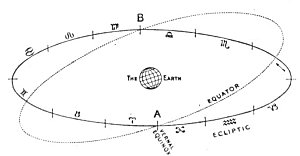
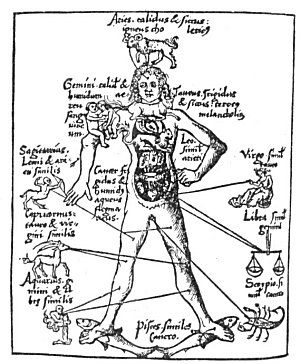
Hall describes the zodiac as a band of sky about 16 degrees wide, divided into 12 houses of 30 degrees each. He says the word comes from the Greek for little animals, and that the creatures assigned to the signs were not chosen because the stars look like them but because each creature symbolized the sun's qualities during that season. Hall discusses the theory that the zodiac originally had only ten signs before Libra was added by splitting the combined Virgo-Scorpio sign in two, making eleven, then twelve.
Hall explains the precession of the equinoxes: the sun regresses through one zodiac sign every 2,160 years and completes the full circle, called the Great Solar or Platonic Year, in about 25,920 years. He connects the astrological ages to religious history: during the Taurian Age, Apis the bull was sacred to Osiris; during the Aryan Age, the lamb was the sacrificial animal; during the Piscean Age, the fish became the symbol of Christ and of his name (ICHTHYS). Hall argues that each religion unconsciously encodes the symbolism of the preceding age.
Hall explains that the 72 five-degree divisions of the zodiac correspond to 72 Hebrew angels, 72 sacred divine names, and the 72 representatives of the Twelve Tribes. He contrasts geocentric astrology, which governs material life, with heliocentric astrology, which governs the spiritual faculties. Hall claims the zodiac may be at least five million years old, inherited from Atlantean or Lemurian civilizations.
“Scorpio, being the sign of occult initiation, the flying eagle--the king of birds--represents the highest and most spiritual type of Scorpio, in which it transcends the venomous insect of the earth.”
on Scorpio's three symbolic forms
Key ideas
- The zodiac has 12 houses of 30 degrees; the sun takes 2,160 years to pass through one sign
- The Great Solar Year is about 25,920 years for one full precession cycle
- Religious symbols follow the age: bull in Taurian, lamb in Aryan, fish (ICHTHYS) in Piscean
- The zodiac's 72 duodecans correspond to 72 Hebrew angel names and 72 Qabbalistic sacred names
- Scorpio has three forms: the scorpion (deception), the serpent (wisdom), and the eagle (initiation)
- Hall says the zodiac is at least 5 million years old, older than any known human civilization
- 1Aries (Ram) Vernal equinox; Lamb of God; spring plowing
- 2Taurus (Bull) Apis sacred; Pleiades; celestial bull broke the year
- 3Gemini (Twins) Twin pillars; phallic symbolism; Castor and Pollux
- 4Cancer (Crab) Summer solstice; Moon's house; origin of life
- 5Leo (Lion) Sun exalted; world created here; Hercules' skin
- 6Virgo (Virgin) Mother of the sun; Isis; gives birth to solar son
- 7Libra (Scales) Autumnal equinox; power of choice; added last
- 8Scorpio (Scorpion) Occult initiation; three forms: insect, serpent, eagle
- 9Sagittarius (Centaur) Human rising from beast; aspiration toward stars
- 10Capricorn (Goat-Fish) Winter solstice; House of Death; lowest power
- 11Aquarius (Water Bearer) Coming age; Saturn's house; waters of eternal life
- 12Pisces (Fish) Current age ending; ICHTHYS; Christ as Fisher of Men
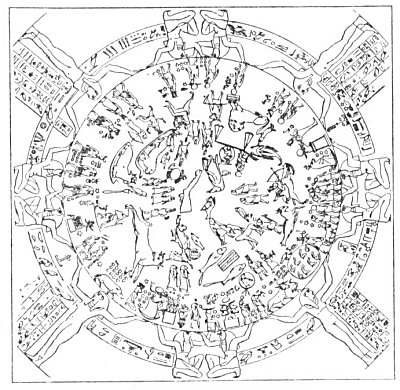
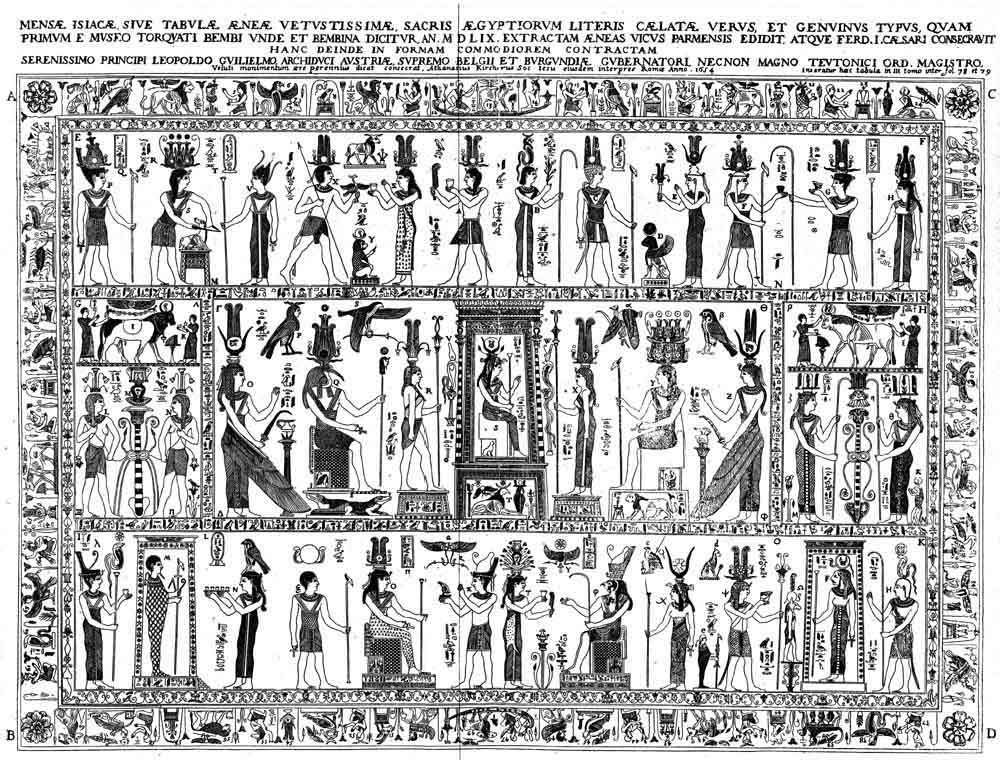
The Bembine Table of Isis
A bronze tablet encodes the entire Egyptian cosmos
The big ideaHall argues that the Bembine Table of Isis is a comprehensive diagram of Egyptian and Hermetic cosmology, mapping the divine triads, planetary spheres, and three cosmic worlds from which all creation flows.
Hall traces the physical history of the Mensa Isiaca, also called the Isiac Tablet. It appeared in Rome after the 1527 sacking, was bought by Cardinal Bembo, passed to the House of Mantua, then to Turin's Museum of Antiquities. Made of bronze with silver inlay, it measures 50 by 30 inches. Hall quotes Thomas Taylor's account of Plato being initiated before this very tablet inside the Great Pyramid at age 49. Despite work by Kircher, Montfaucon, Westcott, and Levi, Hall says its full meaning has never been decoded.
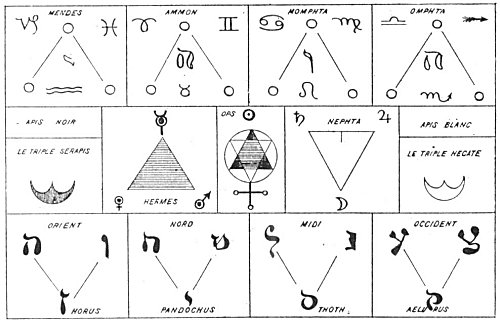
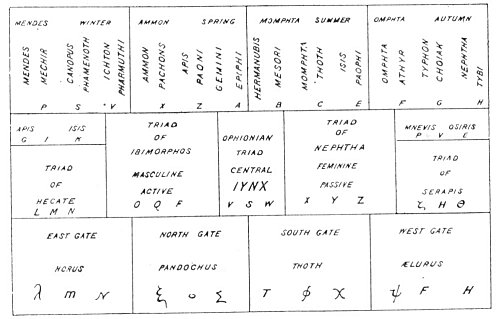
Hall describes the tablet as divided into three horizontal panels holding 45 main figures in 15 triads. The upper panel contains 12 zodiacal figures in four triads, each centered on one of the four fixed signs: Aquarius, Taurus, Leo, and Scorpio, which Hall identifies as Ezekiel's four Cherubim. The central panel holds 21 sacred figures in seven triads radiating from a seated goddess called the IYNX, a symbol of Universal Being. The lower panel shows 12 underworld figures in four triads with two gates, east and west.
Hall connects the 21 central figures to the 21 major trumps of the Tarot (per Eliphas Levi), and the entire table to the Chaldean doctrine of four cosmic planes: archetypal, intellectual, sidereal, and elemental. The same table can also be read alchemically: the central figure is the Universal Mercury, the flaming canopy above is Divine Sulphur, and the cube beneath is elemental salt.
“The early priests believed that a great spiritual power was invoked by correct and unabridged sacrificial ceremonies. If one feature were lacking, the whole was vitiated, says Iamblichus.”
Kircher citing Iamblichus on ritual precision
Key ideas
- The Bembine Table, bronze with silver inlay (50 by 30 inches), passed from Cardinal Bembo to Turin
- Three panels hold 45 figures in 15 triads: 4 triads above, 7 in center, 4 below
- The 21 central figures correspond to the 21 major trumps of the Tarot, per Eliphas Levi
- Four fixed zodiac signs in the upper panel (Aquarius, Taurus, Leo, Scorpio) are the Cherubim of Ezekiel
- Thomas Taylor recorded that Plato was initiated before this tablet in the Great Pyramid at age 49
- Hall says the table encodes four Chaldean cosmic planes: archetypal, intellectual, sidereal, elemental
- IArchetypal PlaneHidden Triad; divine thought-forms; Kether
- IIIntellectual PlaneSeven primary Genii; central panel figures
- IIISidereal Plane12 Governors; zodiacal upper panel; stars
- IVElemental Plane12 Fountain-Fathers; lower panel; two gates
Wonders of Antiquity
Lamps, oracles, and wonders built by initiated architects
The big ideaHall argues that the perpetual lamps of antiquity, the Greek oracles, and the Seven Wonders of the World were not mere cultural achievements but instruments and monuments of the ancient Mysteries, each encoding a planetary or cosmic principle.
Hall opens with accounts of perpetual lamps found in sealed tombs across the world: one on the Appian Way reportedly burned 1,600 years, one near Antioch burned 500 years, one on the island of Nesis predated the Christian era. More than 150 scholars have written on the subject. Hall includes a formula for the fuel, using purified sulphur and wicks of asbestos (called salamander's wool by alchemists). Kircher first attributed the lamps to the Devil, then to secret oil ducts connected to underground asphalt deposits.
Hall describes the oracle of Delphi at length. The Pythia, a virgin priestess, sat on a tripod over a fissure in Mount Parnassus, inhaled fumes said to rise from the decomposing body of the serpent Python, and delivered prophecies in hexameter verse. Five appointed scribes called the Hosii recorded every word and motion. Hall traces the oracle's origin to shepherds who discovered goats dancing over the fissure. He also covers the oracle of Dodona, where Jupiter spoke through oak trees and vibrating brass vases, and the Cave of Trophonius, which left those who entered reportedly unable to smile again.
Hall assigns each of the Seven Wonders of the World to one of the seven planets: the Colossus of Rhodes to the sun, the Temple of Diana to the moon, the statue of Zeus to Jupiter, the Pharos of Alexandria to Saturn, the Mausoleum at Halicarnassus to Mars, the Hanging Gardens to Venus, and the Great Pyramid to Mercury. Hall says all seven were built by initiated architects as permanent monuments to the seven planetary genii.
“The Seven Wonders of the World, while apparently designed for divers reasons, were really monuments erected to perpetuate the arcana of the Mysteries.”
on the esoteric purpose of the Seven Wonders
Key ideas
- More than 150 scholars documented perpetual lamps; asbestos wicks and purified sulphur were the likely materials
- The Pythia at Delphi sat on a tripod over a volcanic fissure and prophesied in hexameter verse
- Five scribes called Hosii recorded every sound and motion of the Pythia during each session
- The oracle of Dodona was Greece's oldest; Jupiter spoke through oak trees and vibrating brass vases
- The Cave of Trophonius was entered feet-first through a tiny hole; visitors emerged delirious
- Hall assigns each of the 7 Wonders to a planet: Pyramid to Mercury, Pharos to Saturn, Rhodes to Sun
The Life and Philosophy of Pythagoras
The philosopher who counted the gods into numbers
The big ideaHall argues that Pythagoras was a divinely prophesied sage who synthesized the Mystery traditions of Egypt, Babylon, and India into a philosophy teaching that number is the foundation of all things.
Hall traces Pythagoras from his prophesied birth at Sidon around 590 BC through extraordinary travels to Egypt, Phoenicia, Chaldea, and India. The oracle at Delphi predicted his birth before it happened. Hall emphasizes that Pythagoras was initiated into the Mysteries of Isis at Thebes, the rites of Adonis in Syria, and the secret lore of the Brahmins. He was the first man to call himself a philosopher, a word he coined to mean one who is attempting to find out rather than one who already knows.
Hall describes the school Pythagoras founded at Crotona in southern Italy, which had three grades (Mathematicus, Theoreticus, and Electus) and divided students into an outer circle and an inner esoteric circle. Hall summarizes Pythagoras's core teachings: God as the Monad, the Supreme Mind distributed everywhere; the universe divided into Supreme, Superior, and Inferior worlds; the five regular solids corresponding to the five elements; and the soul's reincarnation through successive bodies. The sacred Pythagorean Y symbolized the choice between divine and earthly wisdom.
Hall recounts the philosopher's violent end: enemies burned his school and killed Pythagoras, though accounts differ on the details. His disciples swore sacred oaths by the tetractys, ten dots arranged in a triangle. Hall also describes Pythagorean astronomy, which placed a Divine Fire at the center of the universe rather than the earth. He notes that Kepler later tried to assign the five Pythagorean solids to the planetary orbits.
“We must avoid with our utmost endeavor, and amputate with fire and sword, and by all other means, from the body, sickness; from the soul, ignorance; from the belly, luxury; from a city, sedition; from a family, discord; and from all things, excess.”
Pythagoras's maxim on moderation in all things
Key ideas
- Pythagoras was initiated in Egypt, Babylonia, Syria, and India before founding his school at Crotona
- Three degrees at Crotona: Mathematicus (geometry), Theoreticus (sciences), Electus (full secret wisdom)
- God is the Monad: Supreme Mind whose motion is circular, body is composed of light, nature is truth
- Five solids map to elements: tetrahedron=fire, cube=earth, octahedron=air, icosahedron=water, dodecahedron=ether
- The Pythagorean Y represents the choice at life's crossroads: right branch=divine wisdom, left=earthly
- Pythagoras placed a Divine Central Fire, not the earth, at the center of a ten-sphere universe
- IMathematicusGeometry and mathematics as the foundation of all knowledge
- IITheoreticusSuperficial applications of the exact sciences
- IIIElectusFull esoteric illumination and the secret wisdom
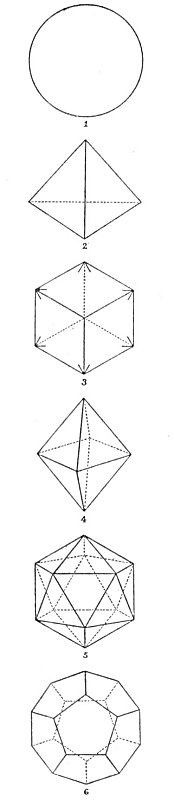
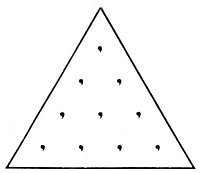
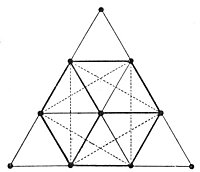
Pythagorean Mathematics
Every number from one to ten names a god
The big ideaHall argues that the Pythagoreans understood each number 1 through 10 as a living divine principle, and that the mathematical properties of numbers (odd, even, perfect, deficient) directly reflect moral and cosmic truths.
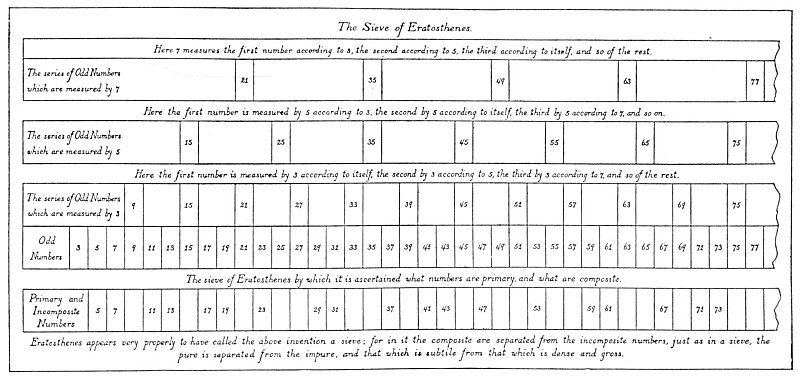
Hall opens by admitting that the deepest keys to Pythagorean number philosophy died with the master and were never written down. What survives are fragments: descriptions of the ten numbers, classifications of odd and even numbers, and gematria (letter-to-number translation) for Greek and Hebrew words. Hall shows how to find the hidden numerical value of sacred names: Jehovah in Hebrew equals 26 (10+5+6+5); Abraxas in Greek equals 365, one for each day of the year.
Hall then walks through the three classes of odd numbers (incomposite, composite, and incomposite-composite) and three classes of even numbers (evenly-even, evenly-odd, and oddly-odd). He explains perfect numbers (whose divisors sum to themselves: 6, 28, 496, 8128) as rare and beautiful, analogous to virtue. Superabundant numbers (whose divisors sum to more than the number) resemble vice; deficient numbers (whose divisors sum to less) resemble weakness.
The heart of the chapter is the table of the ten numbers. Each number from 1 to 10 has a gender, a list of divine names, and a set of symbolic attributes. The Monad (1) is God, Apollo, and the seed of all things. The Duad (2) is matter, division, and ignorance. The Triad (3) is the first actual equilibrium, wisdom, and the triangle. The Decad (10) is the greatest of all, comprehending the entire universe.
“Perfect numbers, therefore, are beautiful images of the virtues which are certain media between excess and defect, and are not summits, as by some of the ancients they were supposed to be.”
From Theoretic Arithmetic, on why perfect numbers model virtue
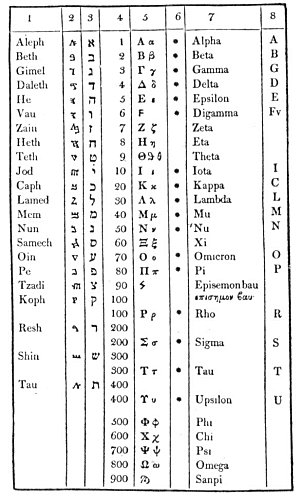
Key ideas
- Jehovah in Hebrew letters sums to 26; Abraxas in Greek sums to 365 (days of the year)
- Perfect numbers (6, 28, 496, 8128) equal the sum of their own divisors and are extremely rare
- Odd numbers are masculine and definite; even numbers are feminine and indefinite
- Monad (1) = God/Apollo; Duad (2) = matter/evil; Triad (3) = wisdom/justice; Tetrad (4) = the soul
- Heptad (7) = the law, religion, and the number of man (spirit 3 + matter 4)
- Decad (10) = perfection of all numbers, heaven and world, the sum of 1+2+3+4
The Human Body in Symbolism
Your body is the map that explains the cosmos
The big ideaHall argues that ancient philosophers made the human body their primary theological text, mapping every organ, limb, and faculty onto a cosmic counterpart, so that to understand man was to understand God and the universe.
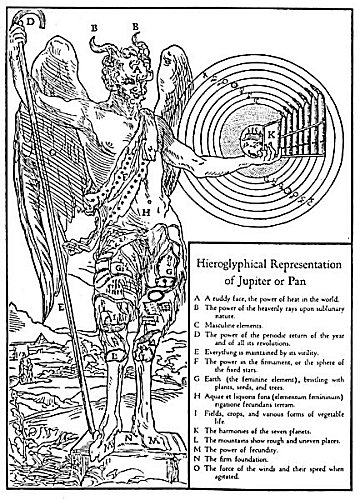
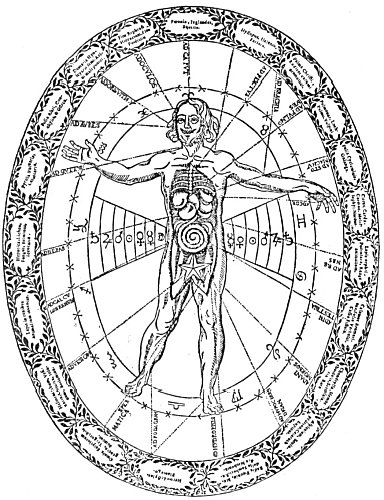
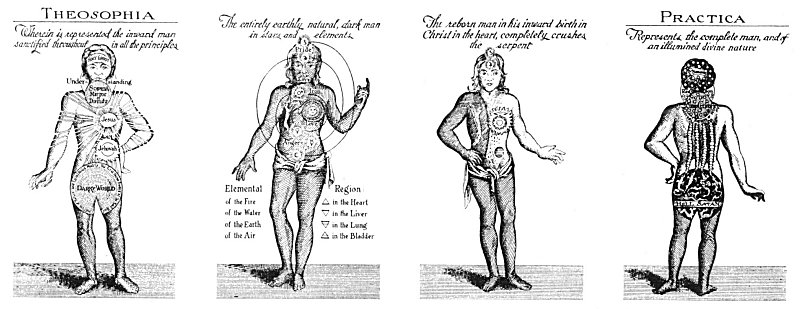
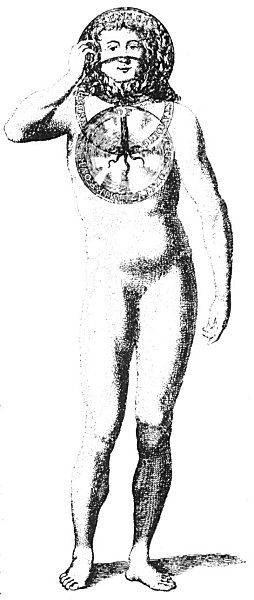
Hall explains that the oldest symbol known to humanity is the human body itself. Ancient Mystery schools taught that every outer reality has an exact counterpart inside man: the universe is the Macrocosm (Grand Man), and each human being is a Microcosm (little universe). Hall says early priests placed a symbolic manikin in the temple sanctuary, covered with hieroglyphs mapping all cosmic relationships. When this knowledge was lost, worshipers began treating the statue as a god rather than a diagram.
Hall describes the three great centers of the body that organized all Mystery initiations. The heart is the spiritual center (the true superior sphere, placed in the middle). The brain is the intellectual link between spirit and matter. The generative system is the material root. The three chambers of the ancient Mystery temples corresponded to these three centers: candidates entered between the feet and received the highest initiation in the chamber representing the brain, where the secret of the heart was revealed.
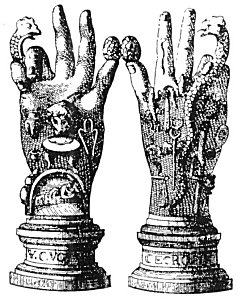
Hall covers the body's finer symbolic details. Five extremities make 5 the number of man. The right side is light and masculine; the left side is dark, feminine, and where the heart sits. Twelve phalanges of the fingers correspond to the zodiac; the thumb's three sections represent the trinity. Hall argues that the New Testament itself is a concealed allegory of bodily regeneration, and that initiation means awakening the divine inner nature without waiting for physical death.
“Personality is suspended upon a thread from the nature of Being”
From the secret work, on man's immortal versus mortal nature
Key ideas
- Macrocosm (Grand Man/universe) and Microcosm (man) mirror each other exactly in every part
- Three body centers: heart (spiritual/superior), brain (intellectual link), generative system (material)
- Three Mystery degrees matched three temple chambers: generative, heart, and brain/heart-secret
- Right side of body = light, masculine, offensive; left side = dark, feminine, defensive (where heart is)
- Five extremities make man the symbol of 5; twelve finger phalanges = twelve zodiac signs
- At birth only one-third of the divine nature descends; the Oversoul remains unincarnated
- IFirst DegreeGenerative center; material mystery; concrete thought
- IISecond DegreeHeart center; emotional and abstract thought
- IIIThird DegreeBrain chamber; heart mystery revealed; spiritual illumination
The Hiramic Legend
The murdered architect who holds the lost word
The big ideaHall argues that the Masonic legend of CHiram Abiff, the murdered master builder of Solomon's Temple, is a layered allegory encoding the death and resurrection of the sun, the suppression of the ancient Mysteries, and the spiritual regeneration of man.
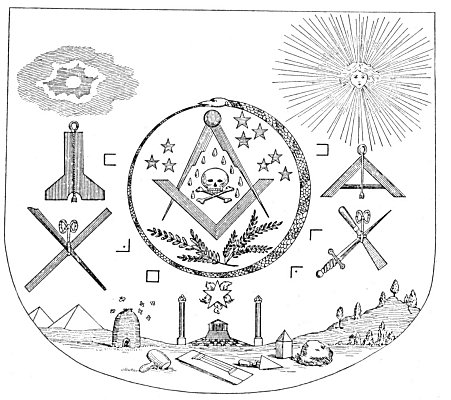
Hall opens with Solomon's Temple: King Solomon, Hiram of Tyre, and CHiram Abiff as the three Grand Masters of the Lodge of Jerusalem. The temple was built without sound or instruments, its stones quarried beneath Mount Moriah and fitted perfectly. Hall focuses on CHiram Abiff, Grand Master of the Dionysiac Architects, who alone knew the Master Mason's Word. Three disgruntled Fellow-Craftsmen (Jubela, Jubelo, Jubelum) ambushed him at the south, west, and east gates, striking him with a gauge, a square, and a maul before burying his body under a sprig of acacia. Solomon's search parties later raised him by the strong grip of a Lion's Paw.
Hall decodes the legend on several levels. As an astronomical allegory, CHiram is the sun killed at the autumnal equinox by three winter signs (Capricorn, Aquarius, Pisces) and raised at the vernal equinox by Aries. As a physiological allegory, CHiram is the Kundalini fire that must rise through the 33 segments of the spinal column into the pineal gland. Hall notes that 33 connects the legend to the first temple's lifespan, David's reign, Masonic degrees, and the age of Jesus at the crucifixion.
Hall also connects CHiram to Jacques de Molay (burned in 1314), to the martyred King Charles I, and to Osiris. The three murderers represent ignorance, superstition, and fear (mob, church, state). Hall argues the Hiramic legend encodes a universal truth: in every civilization, the Beautiful and True are temporarily murdered by these three forces but must be raised again through initiation and philosophy.
“When the mob governs, man is ruled by ignorance; when the church governs, he is ruled by superstition; and when the state governs, he is ruled by fear.”
Hall's summation of the three forces that murder wisdom in every civilization
Key ideas
- CHiram Abiff was struck at south, west, and east gates by Jubela, Jubelo, and Jubelum
- The number 33: first temple lifespan, David's reign years, Masonic degrees, spinal segments, Christ's age
- CHiram = the sun killed at autumnal equinox by three winter signs; raised at vernal equinox by Aries
- CHiram = Kundalini fire rising through 33 spinal segments to open the pineal gland (Eye of Horus)
- Three murderers = ignorance (mob), superstition (church), fear (state), in every age and civilization
- The name CHiram encodes Hebrew letters for sun-light, spirit/air, and radical humidity (universal agent)
- IThree ruffians waitJubela, Jubelo, Jubelum at south, west, east gates
- IICHiram struck three timesGauge, square, maul; refused to reveal the Master Word
- IIIBody buried on Mount MoriahSprig of acacia marks the grave
- IVDiscovery by Solomon's partyEvergreen sprig found; Entered Apprentices cannot raise him
- VRaised by Lion's PawMaster Mason's grip; the Lost Word is whispered
The Pythagorean Theory of Music and Color
Seven ratios that turned the universe into a chord
The big ideaHall argues that Pythagoras discovered music, color, and planetary motion are all expressions of the same mathematical ratios, and that the universe itself is a vast monochord vibrating between absolute spirit and absolute matter.
Hall describes how Pythagoras discovered musical intervals by listening to blacksmiths' hammers. Using weights of 12, 9, 8, and 6 pounds on identical strings, he derived the key ratios: 2:1 for the octave, 3:2 for the fifth (diapente), and 4:3 for the fourth (diatessaron). These same ratios appear in the first four rows of the sacred tetractys. Hall notes that later investigation showed the hammer story was probably legendary, and the actual discovery likely came from the monochord, a single adjustable string.
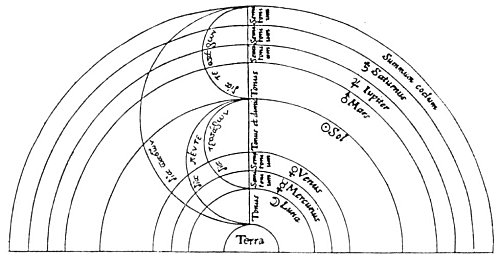
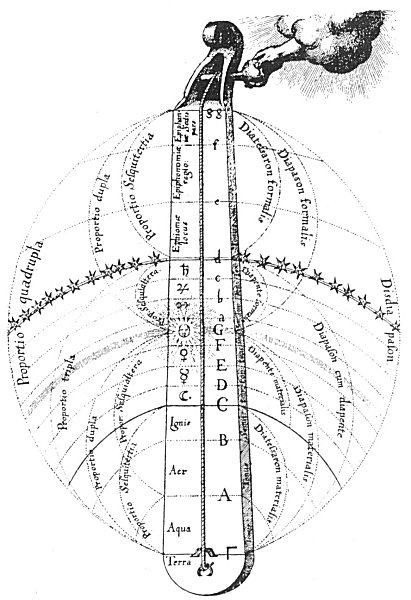
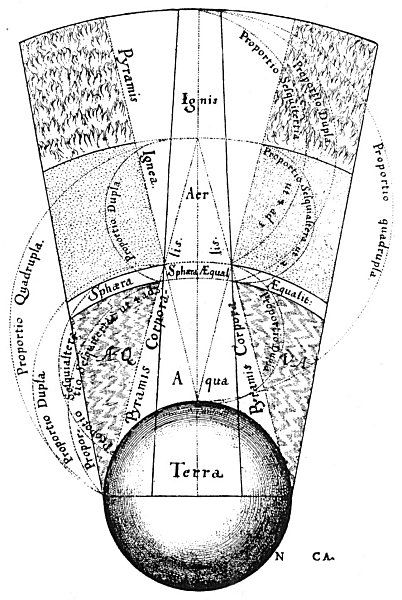
Hall then describes the music of the spheres. Pythagoras saw the universe as an immense monochord strung between absolute spirit and absolute matter. Each planet sounds a tone as it moves; Saturn (farthest) sounds the lowest note, the moon (nearest) the highest. The seven planetary heavens also utter the seven sacred Greek vowels from Alpha to Omega. Greek initiates used specific musical modes as medicine: the Phrygian mode stirred passion and the Spondaic mode calmed it. Pythagoras is credited with curing diseases and calming violent behavior through carefully chosen harmonies.
The chapter closes with color theory. Hall presents a system where the seven colors of the spectrum correspond to the seven notes of the musical scale: red=do, orange=re, yellow=mi, green=fa, blue=sol, indigo=la, violet=si. Three primary colors (red, yellow, blue) correspond to the three fundamental notes (first, third, fifth). Hall quotes Blavatsky linking the seven colors to the seven principles of man and seven states of matter.
“Pythagoras conceived the universe to be an immense monochord, with its single string connected at its upper end to absolute spirit and at its lower end to absolute matter.”
Hall's description of the cosmic monochord, the central image of Pythagorean music theory
Key ideas
- Four string weights (12:9:8:6) produce the three harmonic intervals: octave (2:1), fifth (3:2), fourth (4:3)
- Universe = immense monochord; string connects absolute spirit (top) to absolute matter (bottom)
- Saturn sounds the lowest planetary note; the Moon sounds the highest; seven planets equal seven vowels
- Seven Greek musical modes had therapeutic power; Phrygian stirred passion, Spondaic induced calm
- Seven colors map to seven notes: red=do, orange=re, yellow=mi, green=fa, blue=sol, indigo=la, violet=si
- John Newlands's law of octaves (1864) found chemical elements repeat properties every eighth element
Fishes, Insects, Animals, Reptiles and Birds (Part One)
Each creature hides a divine secret in plain sight
The big ideaHall argues that ancient peoples across every culture chose specific animals as symbols of invisible cosmic forces, because each creature's habits and form visibly demonstrated a hidden spiritual principle.
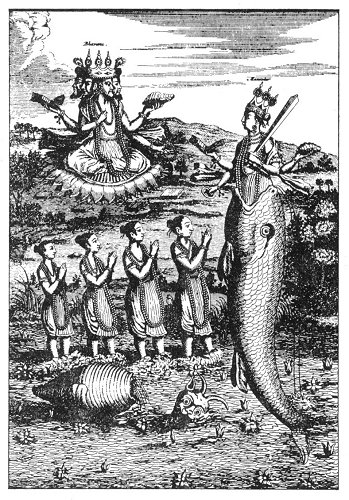
Hall argues that the ancients studied animals as living symbols of invisible forces, not as natural curiosities. Every creature embodied some aspect of divine intelligence. Fish represented the life germ and were sacred to Aphrodite. Hall traces how fish symbolism entered Christianity: the Greek word ICHTHYS (fish) became the first Christian monogram for Jesus. Hall interprets Jonah in the whale as an initiation allegory: the creature represents the darkness of ignorance that engulfs man at birth into life.
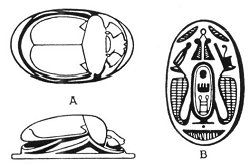
Hall surveys key insects. The Egyptian scarab represented the sun god Khepera, resurrection, and the divine soul concealed inside an earthly shell. Stone scarabs were placed in mummy chest cavities to perform the opening of the mouth ritual. The scorpion symbolized both wisdom (the sign of initiation into the Greater Mysteries) and self-destruction (assigned to Judas Iscariot and the star Antares). The butterfly (Psyche) symbolized the three Mystery degrees through metamorphosis: larva, pupa/chrysalis, and imago. The bee was sacred to Venus and symbolized wisdom, royalty, and generation.
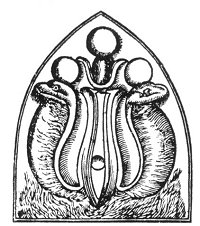
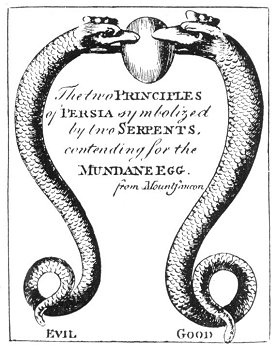
Hall presents the serpent as the symbol of wisdom, spinal fire, and the Universal Savior, not evil. He cites Moses raising a brazen serpent in the wilderness and Christ instructing disciples to be wise as serpents. The seven-headed serpent represents the Deity acting through seven creative spirits. Composite creatures such as the sphinx and centaur represent celestial hierarchies governing human destiny, their mixed forms encoding the composite nature of man.
“The serpent is true to the principle of wisdom, for it tempts man to the knowledge of himself.”
Hall's interpretation of the serpent in the Garden of Eden as a force of self-knowledge
Key ideas
- Fish (ICHTHYS) = life germ, first Christian monogram; Jonah's whale = initiation allegory
- Vishnu's first avatar Matsya was a fish; Oannes (Chaldean savior) had a fish body
- Egyptian scarab = sun god Khepera, resurrection; heart scarabs were placed inside mummies
- Scorpion = both wisdom (initiation into Greater Mysteries) and self-destruction (Judas, Antares)
- Butterfly (Psyche) three stages = three Mystery degrees: larva, pupa/chrysalis, imago
- Serpent = wisdom, immortality, spinal fire, electricity; the Universal Savior and symbol of reincarnation
Fishes, Insects, Animals, Reptiles and Birds (Part Two)
Every creature a symbol hiding a cosmic truth
The big ideaHall argues that birds and animals served ancient mystery schools as symbolic shorthand for spiritual forces, cosmic principles, and stages of initiation.
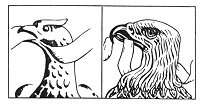
Hall argues birds were chosen as symbols because their flight above the earth suggested spiritual proximity. The eagle stood for Jupiter and the Demiurgic law, and for the alchemical element sulphur. The dove was a yonic symbol sacred to Isis, Venus, and Aphrodite long before Christianity claimed it as the Holy Ghost. The peacock signified immortality because its flesh was believed never to putrefy. The ibis, sacred to Thoth, was revered partly because when it tucked its head under its wing its body resembled a human heart.
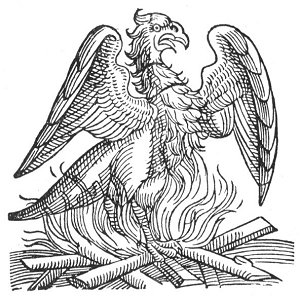
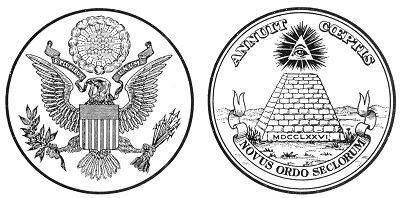
Hall gives the phoenix special attention as the supreme symbol of the Mysteries. The bird lives 500 years, builds a nest of myrrh and frankincense, enters it and dies, and is reborn -- symbolizing the soul's cycle through initiation. He notes the bird used acacia in its nest, carrying Masonic significance. Hall argues the bird on the original 1782 Great Seal was a phoenix, not an eagle, placed by mystery-school initiates who secretly shaped the new nation toward a specific occult purpose.
Hall surveys major animals. The lion, sacred to the sun, was thought to sleep with eyes open -- a symbol of eternal vigilance. The Apis bull, selected by 29 sacred markings and drowned at age 25, served as the living vehicle of Osiris until death released the god. When the spring equinox shifted from Taurus to Aries, the lamb replaced the bull as the solar emblem. The unicorn's single horn, Hall says, may represent the pineal gland of the initiated mystic.
“Modern Masons should realize the special Masonic significance of the phœnix, for the bird is described as using sprigs of acacia in the manufacture of its nest.”
connecting the phoenix to Masonic ritual symbolism
Key ideas
- Hall argues the 1782 Great Seal eagle was drawn as a phoenix, not a bald eagle
- The phoenix lives 500 years, dies in a myrrh nest, and rebirths -- the initiation cycle
- The dove was a yonic emblem sacred to Venus, Isis, and Aphrodite before Christian use
- The Apis bull bore 29 sacred marks and was drowned at age 25 to release Osiris
- The lion symbolized solar vigilance; ancients believed it slept with eyes open
- The unicorn's single horn may represent the pineal gland of the awakened initiate
- 1500-Year Life Feeds on atmosphere; never seen eating by humans
- 2Nest-Building Gathers myrrh, frankincense, and acacia sprigs
- 3Death by Fire Enters nest and dies as flesh decays in the heat
- 4Rebirth Worm from dead flesh grows feathers and rises renewed
- 5Return to Heliopolis Carries parent's bones to the Altar of the Sun
Flowers, Plants, Fruits, and Trees
Every root and branch a word in the divine language
The big ideaHall argues that flowers, plants, and trees served ancient cultures as symbols of creative energy, spiritual growth, and the procreative mystery at the heart of all religion.
Hall opens by defending ancient phallic and yonic plant symbolism as sacred rather than obscene. Plants were chosen for their shape, fragrance, or medicinal properties. The lotus receives the most detail: Hall says its petals represent the seven chakras along the spine. The 4-petaled lotus maps to the sacral ganglion and the 1,000-petaled lotus to the pineal gland. Each petal count corresponds to a specific spiritual energy center, with the rose serving as the Western equivalent of the lotus in Rosicrucian tradition.
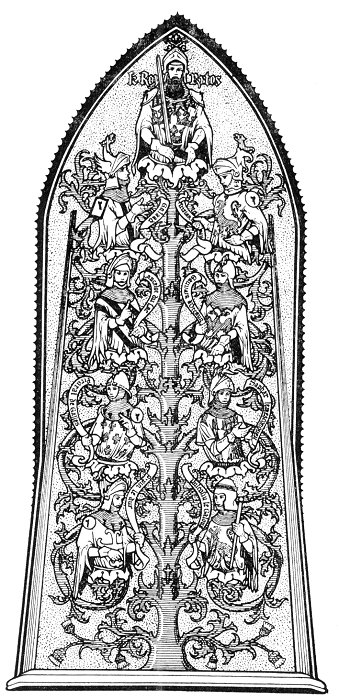
Hall describes tree worship as one of humanity's oldest religious forms. The cosmic tree -- Yggdrasil supporting nine worlds, the inverted Sephirothic tree rooted in heaven -- represents all creation flowing from a single divine source. Hall argues that the cedars of Lebanon used for Solomon's Temple were not timber but illumined initiates called tree men by their traditions. The acacia sprig in Masonic ritual traces directly to Osiris's body, which was found growing inside a tamarisk tree on the shore of Byblos.
Hall discusses specific plants with strong esoteric significance. The mandrake root, resembling a human body, was used as an aphrodisiac talisman and believed to shriek fatally when uprooted. The pomegranate appeared on Solomon's Temple pillars and was the forbidden fruit of the Eleusinian Mysteries. Hall claims the Holy Grail was fashioned from the Lapis Exilis, the green gem knocked from Lucifer's crown by the Archangel Michael and cast through all the celestial spheres to earth.
“The mystic knows that the true supports of God's Glorious House were not the logs subject to decay but the immortal and imperishable intellects of the tree hierophants.”
arguing Solomon's cedars were human initiates, not timber
Key ideas
- Seven chakra lotuses run from the 4-petaled sacral ganglion to the 1,000-petaled pineal center
- The Sephirothic tree is inverted: roots in heaven, branches reaching down to earth
- Hall argues the cedars of Lebanon were illumined initiates, not literal trees
- The acacia sprig in Masonic ritual traces to Osiris's body found inside a tamarisk tree
- Hall claims the Holy Grail was carved from Lucifer's crown gem, the Lapis Exilis
- The mandrake root resembles a human body; it was used as an aphrodisiac talisman in ancient magic
- I4 PetalsSacral ganglion; base center of the spinal column
- II6 PetalsProstatic plexus; second energy center
- III10 PetalsEpigastric plexus and navel; solar plexus center
- IV12 PetalsCardiac plexus; heart center
- V16 PetalsPharyngeal plexus; throat center
- VI2 PetalsCavernous plexus; brow center
- VII1,000 PetalsPineal gland or adjacent center; crown
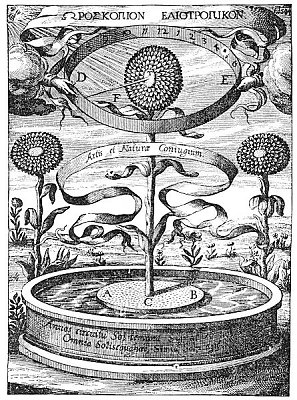
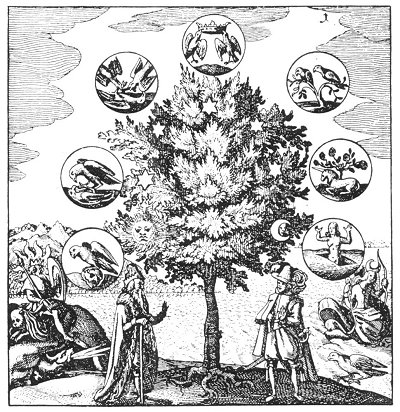
Stones, Metals and Gems
What endures in stone conceals what endures in spirit
The big ideaHall argues that stones, metals, and gems were sacred symbols of cosmic forces, each governed by a specific planet and carrying talismanic power to heal, protect, or transmute the human condition.
Hall argues stone worship was humanity's earliest religion, since stones symbolized the bones of Saturn, the cosmic substructure of all creation. Deucalion casting stones after the Flood to produce new humans is, Hall says, an allegory for spirit descending into matter and progressively raising it from mineral to plant to animal to human. He cites Carnac in Brittany, where thousands of monoliths stand in eleven rows, some weighing 250,000 pounds, as evidence of ancient astronomical knowledge encoded in enduring stone.
Hall gives extended treatment to the Mosaic Tablets of the Law. He says God fashioned the original tablets from the divine sapphire Schethiya, cast from His own throne as the foundation of the worlds. Moses smashed these transcendent tablets when the Israelites proved unworthy, replacing them with rough stone and permanently losing the higher revelation. The pillars Jachin and Boaz on Solomon's Temple represent the active and passive poles of divine energy, and the zodiacal signs Cancer and Capricorn -- the solstice gates of birth and death.
Hall catalogs the magical properties of metals and gems. Each planet governs a metal: gold to the sun, silver to the moon, lead to Saturn, copper to Venus, quicksilver to Mercury, iron to Mars. Each also governs specific gems, and Hall lists correspondences for both planets and all twelve zodiac signs. Talismanic rings combining the right planet, metal, and gem were said to cure disease and prolong life. The philosopher's stone, Hall says, is wisdom itself -- transmuting ignorance into enlightenment.
“The philosopher's stone is really the philosophical stone, for philosophy is truly likened to a magic jewel whose touch transmutes base substances into priceless gems like itself.”
defining the alchemist's stone as wisdom itself
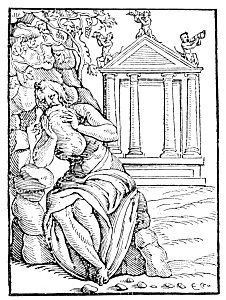
Key ideas
- Seven planets each govern a metal: sun=gold, moon=silver, Saturn=lead, Venus=copper, Mercury=quicksilver
- The Tablets of the Law were carved from divine sapphire Schethiya cast from God's own throne
- Carnac, Brittany: thousands of monoliths in eleven rows, some weighing 250,000 pounds
- Apollonius of Tyana wore seven planetary gem rings daily, reportedly extending his life past 130 years
- Jachin and Boaz represent Cancer and Capricorn, the zodiacal gates of birth and death
- The philosopher's stone is the philosophical stone: wisdom transmuting ignorance into enlightenment
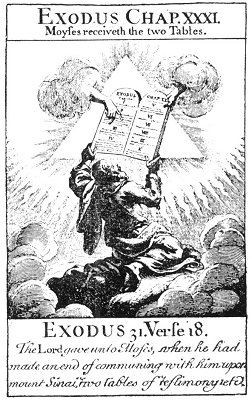
Ceremonial Magic and Sorcery
The art that binds spirits has rules -- and costs
The big ideaHall argues that ceremonial magic is a systematic science of invoking invisible intelligences, and that its dark form arose when Egyptian sorcerers perverted the original Mysteries to control both spirits and populations.
Hall describes ceremonial magic as the art of controlling spirits through formulas, consecrated circles, and hieroglyphic instruments. He traces black magic's origin to Egypt, where Atlantean sorcerers infiltrated the Mysteries, installed themselves as a priestly ruling class he calls the Scarlet Council, and deliberately distorted sacred knowledge to keep the population in spiritual ignorance through idolatry and enforced dogma. Hall says their influence still shapes the world today.
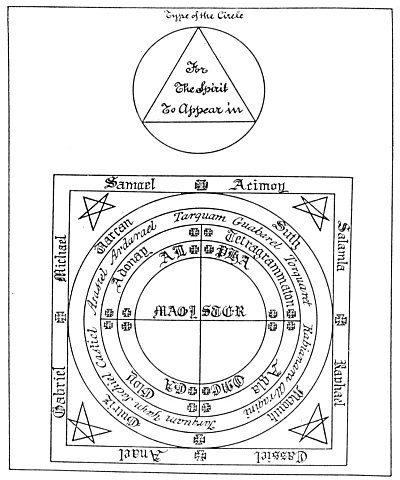
Hall explains the black magic pact. A magician draws a triple circle, invokes a spirit, and if unprotected must sign in his own blood. The spirit then serves until the magician's death, when his soul is claimed. Hall quotes at length from the writings of Dr. Johann Faust, who tested four spirits for speed and chose Aciel -- swift as human thought -- as his servant. Hall lists six specialized spirits: Aciel for wealth, Aniguel for buried treasure, Marbuel for nature's gifts, Aciebel for sea objects, Machiel for honor, and Baruel for mastery of all arts.
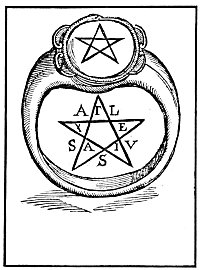
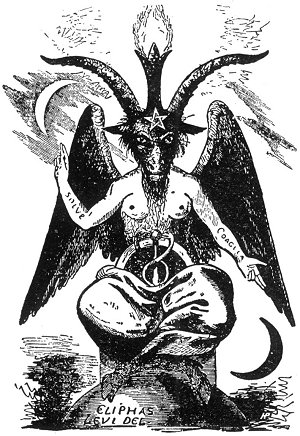
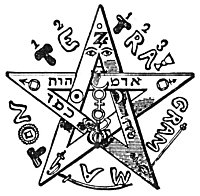
Hall closes with the pentagram. Upright with one point up, it represents the soul rising above animal nature. Inverted with two points up, it becomes the sign of the cloven hoof, the Goat of Mendes, the emblem of perverted power. Hall stresses that black magic has no original symbols of its own -- it can only distort white magic's emblems by inversion or breakage, because it is the misuse of an art rather than a separate art in its own right.
“True black magic is performed with the aid of a demoniacal spirit, who serves the sorcerer for the length of his earthly life, with the understanding that after death the magician shall become the servant of his own demon.”
stating the core bargain of black magical practice
Key ideas
- Black magic originated when Atlantean sorcerers formed the Scarlet Council and corrupted Egypt's Mysteries
- Eliphas Levi's astral light is the universal life force both white and black magic manipulate
- Dr. Faust's chosen spirit Aciel was three feet tall and moved as swift as human thought
- A black magic pact requires a blood signature; the demon claims the magician's soul after death
- Upright pentagram (one point up) = soul over matter; inverted (two points up) = Goat of Mendes
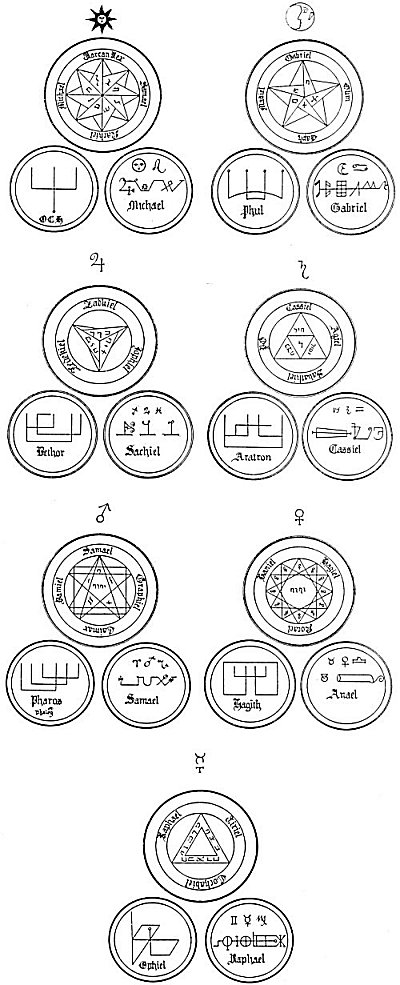
- Seven planetary pentacles each correspond to a class of invisible planetary intelligence
- IDraw CircleThree concentric rings on virgin parchment before sunrise
- IIInvoke SpiritPronounce the spirit's name clearly with sacred formulae
- IIISpirit AppearsSpirit demands conditions before agreeing to obey
- IVNegotiate PactMagician signs with blood; sets the terms of service
- VSpirit ServesDemon fulfills requests for wealth, knowledge, or power
- VIDeath ClaimedAt magician's death his soul belongs to the demon
The Elements and Their Inhabitants
Four elements, four invisible nations living inside them
The big ideaHall argues, following Paracelsus, that each of the four classical elements contains an invisible etheric counterpart inhabited by a distinct race of Nature spirits -- gnomes, undines, salamanders, and sylphs.
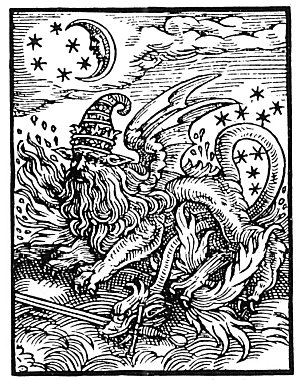
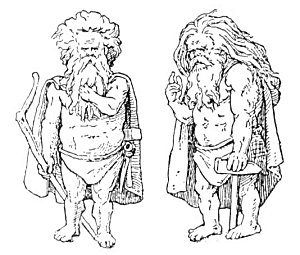
Hall attributes to Paracelsus the most systematic account of elemental beings. Each classical element has both a gross physical form and an invisible spiritual counterpart, and each counterpart is inhabited by a specific class of Nature spirit: gnomes in earth ether, undines in water ether, salamanders in fire ether, and sylphs in air ether. These beings consist of only one substance. With little internal friction, they live 300 to 1,000 years, but at death they dissolve back into their element, leaving no immortal individual soul.
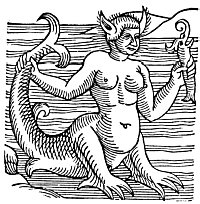
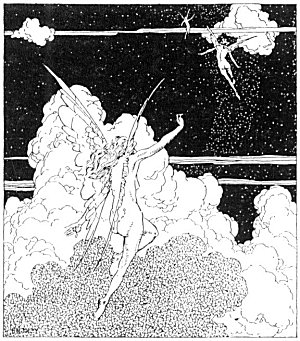
Hall describes each kingdom. Gnomes, assigned to the North under king Gob, guard buried metals and gems and work with the mineral nature of plants and animals. Undines, assigned to the West under king Necksa, inhabit every body of water and tend its life; their most famous form is the mermaid. Salamanders, the most powerful, inhabit fire ether under king Djin and cannot safely be approached by humans. Sylphs, the highest and longest-lived, inhabit etheric air under king Paralda and gather around poets and artists to inspire them.
Hall warns against confusing elementals with true angels, which have composite spiritual natures. He also distinguishes them from the incubus and succubus, which Paracelsus describes as parasitic astral creatures born of evil human thoughts and attaching themselves to morally degraded people. Hall ends with Count de Gabalis's claim that heroes including Hercules, Achilles, and the philosopher Plato were born from unions between humans and elemental spirits.
“They are beings occupying a place between men and spirits, resembling men and women in their organization and form, and resembling spirits in the rapidity of their locomotion.”
Paracelsus via Hall defining the nature of elemental beings
Key ideas
- Gnomes (earth, North) guard gems and metals underground; their king is Gob
- Undines (water, West) inhabit all water and resemble Greek goddesses; their king is Necksa
- Salamanders (fire, South) are the most powerful elementals; their king is Djin
- Sylphs (air, East) live up to 1,000 years and inspire artists; their king is Paralda
- Elementals have no immortal soul; at death they dissolve back into their single element
- Paracelsus says elementals occupy a place between men and spirits: they have flesh but no compound soul
Hermetic Pharmacology, Chemistry, and Therapeutics
Ancient priests healed the body by treating the invisible first
The big ideaHall argues that ancient Hermetic medicine treated disease as fundamentally spiritual in origin, identifying seven supernatural causes and seven corresponding treatments long before modern pharmacology existed.
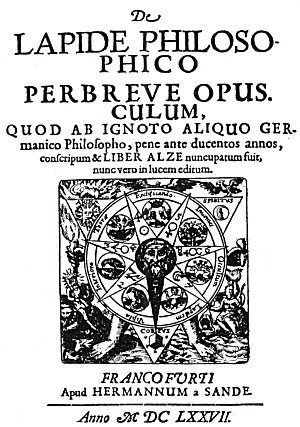
Hall argues that ancient healing was a temple secret inseparable from philosophy and religion. Hippocrates, by separating medicine from other sciences in the 5th century BC, began a fragmentation that created modern medicine's blind spots. Paracelsus, whom Hall calls the Second Hermes, spent his life reconstructing Hermetic medicine. Its central principle is the archaeus, a universal vital force carried through all things by its vehicle, the mumia. Disease begins when the mumia is disturbed.
Hall lists seven Hermetic causes of disease: evil spirits, misalignment of spiritual and material nature, morbid mental attitudes (which generate illness germs), karma, adverse planetary aspects, misuse of a bodily organ, and foreign substances. Seven treatments correspond: exorcism, sound and color vibration, planetary metal talismans, astrologically matched herbs, prayer, dietary regulation, and practical physical medicine. Nicholas Culpeper practiced this system in 17th-century England, assigning each planet to specific herbs and using them to counteract planetary disease.
Hall describes ancient priestly use of plant drugs to induce clairvoyance during initiation. Egyptian priests gave candidates herbal potions so they could perceive the gods in spirit form during the Mysteries. The Belgian alchemist von Helmont accidentally touched an unnamed root to his tongue and experienced two hours of consciousness shifted entirely to his stomach. Hall identifies this as forced functioning through the sympathetic nervous system -- the solar plexus, an alternative brain known to the ancients. He closes by arguing modern drug misuse degrades what were once carefully guarded sacred arts.
“Disease is unnatural, and is evidence that there is a maladjustment within or between organs or tissues. Permanent health cannot be regained until harmony is restored.”
stating the Hermetic principle underlying all ancient medical practice
Key ideas
- The archaeus is universal vital force; the mumia is its etheric vehicle in all things
- Paracelsus identified 7 disease causes; the first five are spiritual: evil spirits, karma, mental attitude
- Culpeper matched every planet to specific herbs and opposed planetary disease with contrary planetary herbs
- Egyptian priests gave initiates herbal potions to induce clairvoyance and perception of the gods
- Von Helmont tasted an unnamed root and reported 2 hours of consciousness shifted to his stomach
- Hall claims germs are minute creatures born from evil human thoughts and emotional states
- IEvil SpiritsAttached entities feeding on the patient's vital force
- IISpirit-Matter DiscordInvisible and physical natures failing to coordinate
- IIIMental AttitudeMorbid emotions and passions poisoning the etheric body
- IVKarmaCosmic compensation the physician must not block
- VPlanetary AspectsCelestial forces impelling illness in a weak constitution
- VIOrgan MisuseOverstraining a member or overtaxing the nervous system
- VIIForeign SubstancesImpurities, poor diet, or obstructions in the body
The Qabbalah, the Secret Doctrine of Israel
Israel's deepest secret hidden inside the Torah
The big ideaHall argues that the Qabbalah is the innermost layer of Jewish teaching, a divine doctrine transmitted from angels to patriarchs and hidden in code inside the Pentateuch.
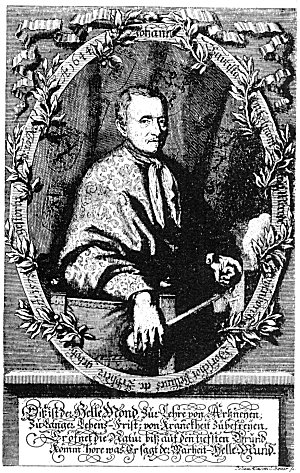
Hall explains that Hebrew theology has three layers. The outermost was the written Law, shared with all Israelites. The second was the Mishna, or soul of the law, taught to rabbis and teachers. The deepest was the Qabbalah, the soul of the soul of the law, reserved for the highest initiates. Hall says Moses brought the Qabbalah down from Mount Sinai during his third and final forty-day visit in the presence of God.
Hall traces the Qabbalah's origin before human history. God first taught it to a school of angels before Adam's fall. The angel Raziel then carried it to Adam so humanity might regain its lost estate. Specific angels passed the teaching to each patriarch: Tophiel taught Shem, Raphael taught Isaac, Metatron taught Moses, and Michael taught David. Hall describes three key Qabbalistic texts: the Sepher Yetzirah (attributed to Rabbi Akiba, c. AD 120), the Sepher ha Zohar (compiled c. AD 1305 by Moses de Leon), and the Apocalypse.
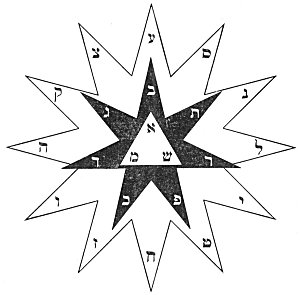
The bulk of the chapter is Hall's composite translation of the Sepher Yetzirah. The text describes God creating the universe through thirty-two paths: ten Sephiroth and twenty-two Hebrew letters. The letters fall into three groups. Three mother letters (aleph, mem, shin) represent air, water, and fire. Seven double letters correspond to the seven planets, the seven days of the week, and the seven openings of the face. Twelve simple letters match the twelve zodiac signs, twelve months, and twelve key organs of the body. Every creature and every word arose from one Name and the combinations of its letters.
“The appearance of the ten spheres (Sephiroth) out of Nothing is as a flash of lightning or a sparkling flame, and they are without beginning or end.”
From the Sepher Yetzirah describing the ten Sephiroth
Key ideas
- Hebrew theology has three layers: written Law, Mishna, and Qabbalah as innermost secret
- Moses received the Qabbalah from God during his third 40-day period on Sinai
- Angels taught each patriarch: Raziel taught Adam, Metatron taught Moses, Michael taught David
- Three key books: Sepher Yetzirah (c. AD 120), Sepher ha Zohar (c. AD 1305), Apocalypse
- 32 paths of wisdom = 10 Sephiroth plus 22 Hebrew letters
- 22 letters: 3 mothers (A, M, Sh), 7 doubles (planets), 12 simples (zodiac signs)
- I3 MothersA, M, Sh; air, water, fire; universe, year, body
- II7 DoublesB through Th; seven planets and days of the week
- III12 SimplesH through Q; twelve zodiac signs and months
Fundamentals of Qabbalistic Cosmogony
How the Infinite contracted to create all worlds
The big ideaHall describes the Qabbalistic teaching that the unknowable Absolute, AIN SOPH, retracted into a central point to produce four nested worlds, each a dimmer reflection of the one above it.
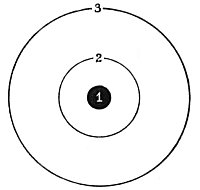
Hall describes AIN SOPH as the Incomprehensible Absolute from which everything emerges. AIN SOPH has no substance, essence, or intelligence of its own, yet it nurtures all things. Its symbol is a closed eye and a circle. Hall explains that it has a threefold nature: AIN (pure void), AIN SOPH (boundless), and AIN SOPH AUR (limitless light). When AIN SOPH contracts toward its own center, it creates the first point, Kether, and the emptied surrounding area becomes the Abyss.
From Kether, nine additional globes radiate outward, forming the first ten Sephiroth called the Rings of Sacred Names. Hall maps four nested worlds created by successive reflections of these ten powers. The highest, Atziluth, holds the purest divine names. Briah is populated by ten Archangels including Metatron, Raziel, and Michael. Yetzirah holds nine angelic orders including Cherubim and Seraphim. The lowest, Assiah, is the physical solar system from the Primum Mobile down through the seven planets to the four elements.
In the World of Assiah, matter distorts the pure spiritual forces and generates ten hierarchies of demons that mirror the ten good hierarchies above. Satan and Moloch rule the evil crown, and Lilith governs the evil foundation. Hall also presents the Fifty Gates of Intelligence: a ladder from primordial chaos at Gate 1 through all kingdoms of nature, the seven planetary heavens, and the angelic world, up to God alone at Gate 50. Moses passed through forty-nine gates; Hall notes that according to Kircher only Christ passed the fiftieth.
“When the concealed of the Concealed wished to reveal Himself He first made a single point: the Infinite was entirely unknown, and diffused no light before this luminous point violently broke through into vision.”
The Zohar on the first moment of creation
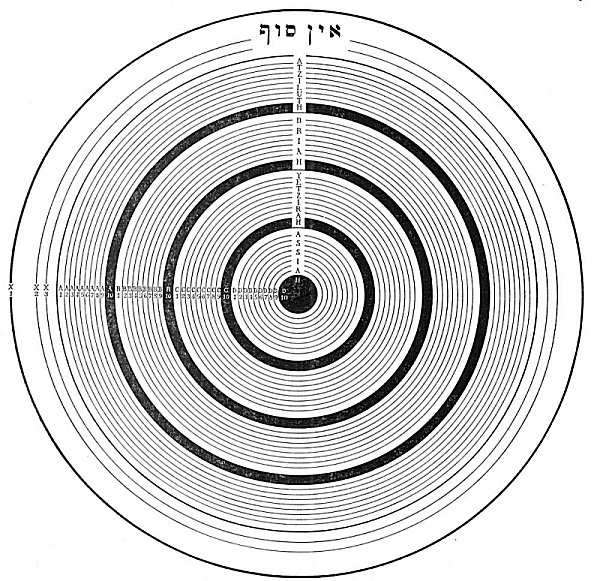
Key ideas
- AIN SOPH is the Absolute; its three aspects are AIN, AIN SOPH, and AIN SOPH AUR
- AIN SOPH contracts to a central point called Kether, leaving the Abyss around it
- Four worlds: Atziluth (divine names), Briah (archangels), Yetzirah (angels), Assiah (matter)
- Each world holds 10 Sephiroth; Assiah also holds 10 demon hierarchies as distorted reflections
- Ten Archangels of Briah: Metatron, Raziel, Tsaphkiel, Michael, Gabriel, Sandalphon, and others
- The Fifty Gates of Intelligence run from primordial chaos to God; Moses passed 49
- IAIN SOPHEternal Absolute; three aspects; no form or limit
- IIAtziluthWorld of Divine Names; ten purest sacred names
- IIIBriahWorld of Archangels; Metatron rules as second crown
- IVYetzirahWorld of Angel Hierarchies; Cherubim and Seraphim
- VAssiahWorld of Matter; seven planets and four elements
The Tree of the Sephiroth
Ten spheres, three pillars, one map of the cosmos
The big ideaHall describes the Sephirothic Tree as a map of the universe and the human body, built from ten divine spheres and twenty-two connecting paths that together encode every mystery of creation.
Hall describes the Sephirothic Tree as ten globes of light connected by twenty-two channels, arranged on three columns. The right column, Jachin, represents Wisdom and Mercy; the left, Boaz, represents Understanding and Severity; the center represents Equilibrium and Mildness. The ten globes are numbered 1 through 10. Adding the ten numbers to the twenty-two channels gives thirty-two, which Hall connects to the 32 Paths of Wisdom, to the first 32 degrees of Freemasonry, and to the 32 times the name of God appears in the first chapter of Genesis.
Hall maps the ten Sephiroth onto the body of Adam Kadmon, the Heavenly Man. Kether is the crown of the head; Chochmah and Binah are the two brain hemispheres; Chesed and Geburah are the right and left arms; Tiphereth is the heart; Netsah and Hod are the two legs; Jesod is the generative system; Malchuth is the two feet. Hall further divides the tree into five groupings: Macroprosophus (the Great Face), Abba the Father, Aima the Mother, Microprosophus the Lesser Adam, and Malchuth as his Bride.
Hall analyzes the Tetragrammaton IHVH and shows how each letter corresponds to a part of the tree and to the human body. Adding the values of the four Sephiroth on the central column (1, 6, 9, 10) gives 26, the number of Jehovah. He notes that inserting the letter Shin into Jehovah forms the word Jehoshua or Jesus. The chapter closes with Daath, a hypothetical eleventh Sephira representing divine thought or the Word by which the worlds were established.
“Within His skull exist daily thirteen thousand myriads of worlds which draw their existence from Him and by Him are upheld.”
The Greater Holy Assembly on Macroprosophus, the first Sephira
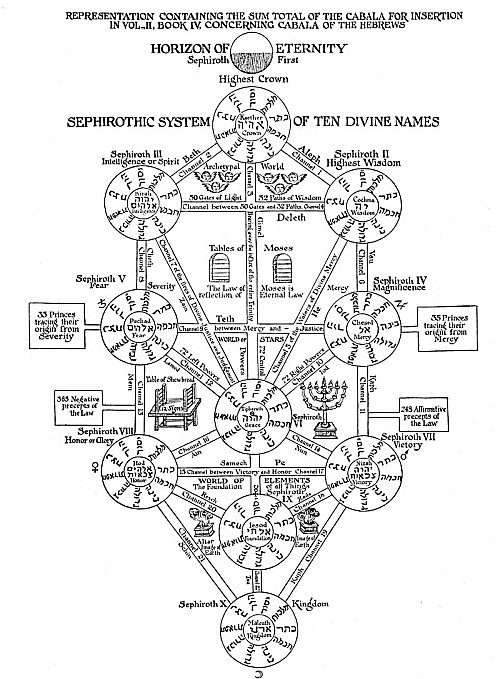
Key ideas
- Sephirothic Tree: 10 globes, 22 channels, 3 columns (Jachin/Mercy, Boaz/Severity, center/Mildness)
- 10 + 22 = 32 Paths of Wisdom; linked to the first 32 degrees of Freemasonry
- Adam Kadmon: Kether = head, Tiphereth = heart, Jesod = generative system, Malchuth = feet
- Five divisions: Macroprosophus, Abba, Aima, Microprosophus (six Sephiroth), and the Bride
- Central column values 1+6+9+10 = 26, the numerical value of Jehovah
- Inserting Shin into IHVH yields IHSVH, the Hebrew name Jehoshua or Jesus
- 1Kether Crown; Primum Mobile; crown of Adam Kadmon
- 2Chochmah Wisdom; Zodiac; right brain hemisphere
- 3Binah Understanding; Saturn; left brain hemisphere
- 4Chesed Mercy; Jupiter; right arm of Heavenly Man
- 5Geburah Severity; Mars; left arm of Heavenly Man
- 6Tiphereth Beauty; Sun; the heart and spiritual center
- 7Netsah Victory; Venus; right leg of Heavenly Man
- 8Hod Glory; Mercury; left leg of Heavenly Man
- 9Jesod Foundation; Moon; the generative system
- 10Malchuth Kingdom; Elements; the two feet, earth itself
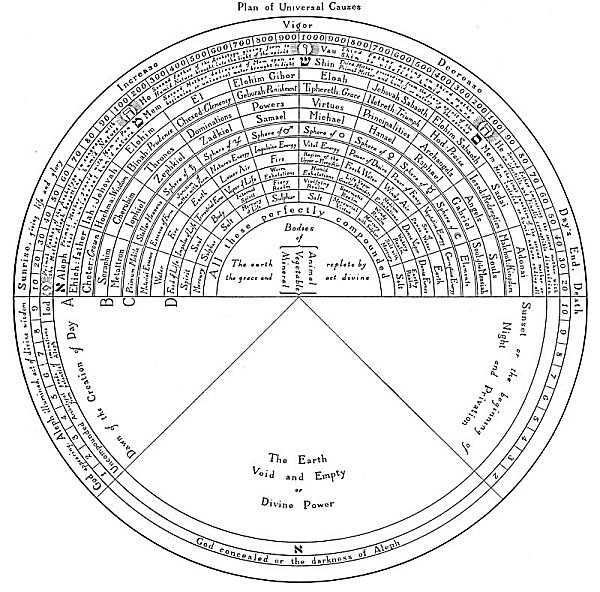

Qabbalistic Keys to the Creation of Man
Adam, the Elohim, and the hidden meaning of Genesis
The big ideaHall argues that Genesis is a coded esoteric document, that Adam represents the entire human race across four spiritual worlds, and that the fall and redemption of man follow a mystery school script.
Hall criticizes the literal reading of the Bible and explains three Qabbalistic tools for decoding scripture. Gematria converts letters to numbers and compares totals to find hidden identities. Notarikon takes the first or last letters of words to spell new messages; the word Amen, for example, hides the phrase 'the Lord is the faithful King.' Temurah rearranges or substitutes letters by fixed tables. Hall uses these methods to expose the plural and androgynous nature of the word Elohim, which he says is wrongly translated as the singular 'God.'
Hall argues that Adam is not a historical individual but a symbol for the human race spread across four worlds. The first Adam is purely spiritual and androgynous in Atziluth. With each descent through Briah and Yetzirah, the Adamic being loses purity. In Assiah, the fall splits Adam into two physical bodies: one male and one female. Hall examines two schools of thought on this division. One holds that each soul was cut in two and must find its mate. The other holds that man remains complete but has suppressed one pole.
The chapter closes with a mystery play in Hall's own words. Adam, banished from Eden, confronts the cherubim who guard the gate of Paradise and claims redemption through the Christ who descended into matter. He is admitted and meets the serpent, who confesses to being his Adversary and tempter through the ages. The serpent then transforms into a radiant golden angel and reveals itself as the instrument of Adam's salvation, declaring: 'I am the Way, the Life, and the Truth!'
“Through ignorance man falls; through wisdom he redeems himself.”
on the allegory of Adam banished from Eden
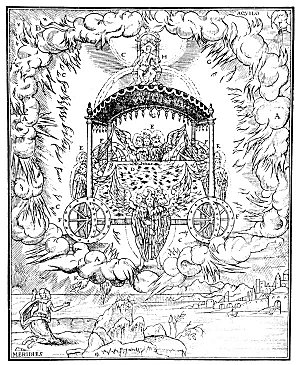
Key ideas
- Three decoding tools: Gematria (numbers), Notarikon (initial letters), Temurah (substitution)
- Elohim is plural and androgynous; translating it as 'God' obscures polytheistic Hebrew roots
- Four Adams correspond to four worlds: Atziluth (pure), Briah, Yetzirah, Assiah (fallen/divided)
- ADM signifies a race, not an individual; Adam, David, and the Messiah share one World Soul
- Two theories: soul-mate division vs. suppressed polarity; deep philosophy favors the latter
- The Adversary (Satan) is revealed as the agent of man's salvation, not of pure destruction
- IFirst AdamAtziluth; pure spirit; androgynous; undivided
- IISecond AdamBriah; still androgynous; tenth part is Malchuth
- IIIThird AdamYetzirah; clothed in a body of light
- IVFourth AdamAssiah; fallen; divided into male and female bodies
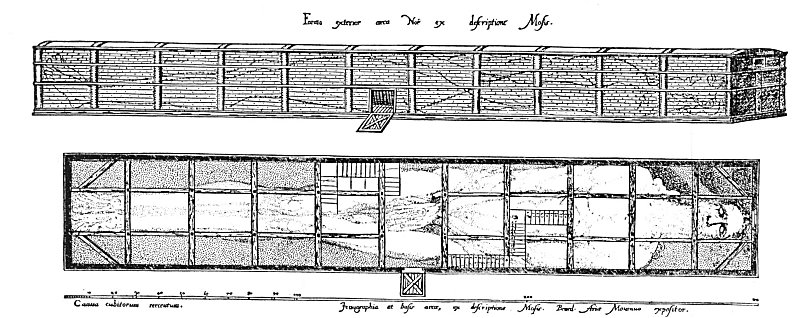
An Analysis of Tarot Cards
Sacred philosophy hidden inside a card game
The big ideaHall argues that the 78 Tarot cards are the surviving leaves of an ancient book of universal wisdom, originally belonging to Egyptian or Hermetic mystery schools and deliberately disguised as playing cards.
Hall surveys competing theories about the Tarot's origin. Some scholars trace the cards to India by way of Arabia. Hall favors the view that the Knights Templars brought them from the Saracens in Syria and disguised them as a gambling game to hide their philosophical content from persecutors. He also notes that Gypsies, described as Egyptians in early English law, may have carried the cards from Alexandria after the destruction of the Serapeum, preserving the Book of Thoth.
Hall describes the structure of the 78-card deck: 22 major trumps and 56 minor trumps. The central dispute is where to place the unnumbered zero card, Le Mat the Fool. Levi places it between cards 20 and 21; Court de Gebelin and Paul Case place it before card 1. Hall identifies the Fool with AIN SOPH, the Infinite, and the 21 numbered major trumps as its limited expressions in creation. Each major trump encodes a principle: the Magician holds the tools of creation (cup, coin, sword, wand), and the Wheel of Fortune shows karma cycling between Anubis and Typhon.
Hall walks through all 22 major trumps, noting Masonic, alchemical, and Qabbalistic symbols in each. Death holds no name because change is the only constant. The Hanged Man forms an inverted alchemical symbol of sulphur. The World card shows the completed initiate surrounded by the four Cherubim. The four suits of the 56 minor trumps correspond to the four elements, the four Qabbalistic worlds, and four social classes: cups for priests, swords for soldiers, coins for tradesmen, and rods for farmers.
“An imprisoned person, with no other book than the Tarot, if he knew how to use it, could in a few years acquire universal knowledge, and would be able to speak on all subjects with unequalled learning and inexhaustible eloquence.”
Eliphas Levi on the Tarot as a complete system of knowledge
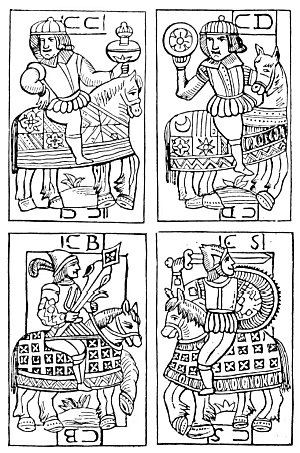
Key ideas
- Tarot may originate with Knights Templars who disguised philosophical cards as a game
- 78 cards: 22 major trumps (arcana) plus 56 minor trumps in four suits
- Le Mat the Fool (card 0) represents AIN SOPH; the 21 other majors are its expressions
- Each major trump corresponds to a Hebrew letter, though the exact order is disputed among authorities
- Four suits (cups, swords, coins, rods) map to priesthood, military, merchants, farmers
- Modern 52-card deck is Tarot with the page removed; 52 cards equal 52 weeks in the year
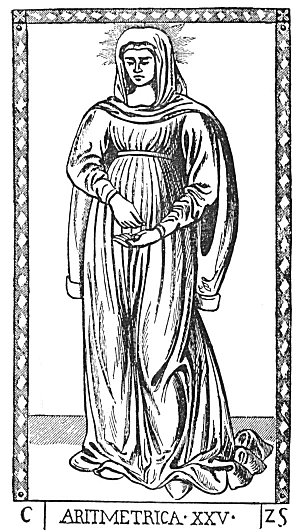
The Tabernacle in the Wilderness
Moses built a universe in canvas and gold
The big ideaHall argues that the Tabernacle was a portable Egyptian mystery temple whose every dimension, furnishing, and priestly garment symbolized a part of the cosmos and of the human body.
Hall argues that much of the Pentateuch is drawn from Egyptian Mystery rituals and that Moses himself was an Egyptian initiate. The word Moses, he says, meant in esoteric Egyptian usage an initiate sent out to teach. The Tabernacle was modeled on Egyptian temples, which were themselves miniature universes. Hall notes that the Ark of the Covenant closely resembled Egyptian arks, as shown in bas-reliefs at the Temple of Philae.
Hall describes the Tabernacle using Josephus and a 1599 English Bible. The outer court, 50 by 100 cubits, held the Altar of Burnt Offerings at the entrance and the Laver of Purification beyond it. The Holy Place contained the seven-branched golden Candlestick, the Table of Twelve Loaves of Shewbread, and the Altar of Incense. Beyond a veil was the Holy of Holies, holding only the Ark of the Covenant. Hall maps each item to the human body: the Incense Altar is the larynx, the Holy Place is the trunk, and the Holy of Holies is the head.
The High Priest's vestments are rich in symbol. The Ephod was fastened by two oracular onyx stones that glowed to answer yes or no. The Breastplate held twelve gems for the twelve tribes and, Hall suggests, the twelve zodiac signs. The Urim and Thummim hidden in the breastplate's back pocket were used for divination. The triple-banded gold crown meant rulership over heaven, earth, and the underworld. Hall connects the three rooms of the Tabernacle to the three degrees of Masonry's Blue Lodge and to the three chambers of the Great Pyramid of Gizeh.
“Life is the great mystery, and only those who pass successfully through its tests and trials, interpreting them aright and extracting the essence of experience therefrom, achieve true understanding.”
on the Tabernacle as a symbol of mortal life itself
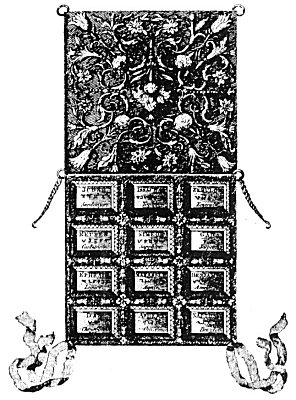
Key ideas
- Moses was an Egyptian initiate; in esoteric Egyptian usage 'Moses' meant a teacher from the Mysteries
- The Tabernacle is a portable Egyptian mystery temple mapping the cosmos and the human body
- Three rooms: Outer Court (earth/body), Holy Place (soul/trunk), Holy of Holies (spirit/head)
- Candlestick has 7 lamps and 72 ornaments; 12 Shewbread loaves represent the 12 months
- Breastplate holds 12 gems for 12 tribes and 12 zodiac signs; Urim and Thummim used for divination
- Three rooms equal the three Blue Lodge Masonic degrees and the three chambers of the Great Pyramid
- IOuter CourtBronze altar of sacrifice; earthly constitution
- IILaverWater basin; purification of body and soul
- IIIHoly PlaceCandlestick, Shewbread, Incense; the body's trunk
- IVVeilSeparation of matter from spirit; four elements
- VHoly of HoliesArk of the Covenant; the divine mind and head
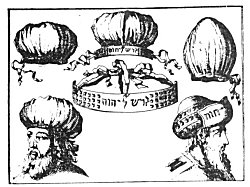
The Fraternity of the Rose Cross
Who were the Rosicrucians, and did they exist?
The big ideaHall surveys four competing theories about the Rosicrucian Order, from literal history to mystical transcendence, leaving the truth deliberately unresolved.
Hall opens with unanswered questions about the Rosicrucians: who they were, whether they really met, whether Christian Rosencreutz was real. He then lays out the Fama Fraternitatis, the Order's founding manifesto. It tells of C.R.C., a German nobleman who studied at Damcar in Arabia, then Fez, then returned to Europe and founded a secret brotherhood of eight men. They bound themselves by six rules, including healing the sick for free, wearing no special garment, and keeping their fraternity secret for 100 years. The climax of the story is the discovery of C.R.C.'s seven-sided vault, perfectly preserved 120 years after his death.
Hall presents four postulates. The first takes the Fama literally. The second accepts the Order's existence but disagrees on its origin, some linking it to Freemasonry or Egypt. The third dismisses the whole story as a literary hoax, possibly by Johann Valentin Andreae. The fourth, transcendental view holds that the Rosicrucians were real adepts who worked in an astral realm invisible to ordinary people. Hall argues that the true Rosicrucians chose their own disciples secretly, communicated through coded letters, and performed three alchemical initiations to free the soul from the body.
Hall notes strong evidence linking Rosicrucianism to Freemasonry through figures like Elias Ashmole and Robert Fludd. He also explores the etymology of the word Rosicrucian, noting that Ros means dew and Rus means concealment. The rose on the cross, he concludes, likely means the soul crucified on the body, held by three nails, and symbolizes human regeneration.
“The real Rosicrucian or Mason cannot be made; he must grow to be one by the expansion and unfoldment of the divine power within his own heart.”
Franz Hartmann defines genuine Rosicrucian membership
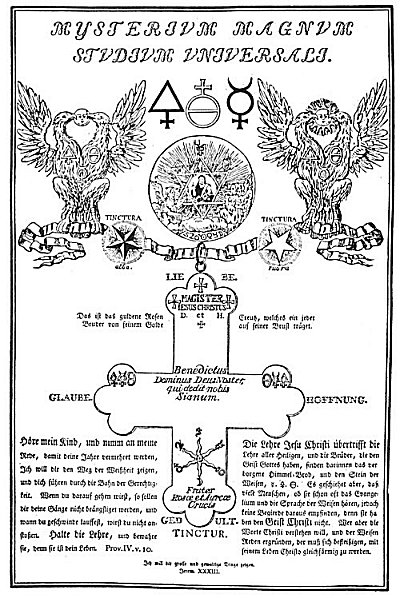
Key ideas
- C.R.C. studied three years in Damcar, two years in Fez, then founded the Order with 8 brothers.
- Six rules included free healing, no special dress, annual meeting, and 100 years of secrecy.
- The vault of C.R.C. was discovered 120 years after his death, body perfectly preserved.
- Four theories: literal history, Masonic/Egyptian origin, literary hoax, transcendental astral order.
- Elias Ashmole and Robert Fludd are named links between Rosicrucianism and Freemasonry.
- The word Ros means dew; Ras means wisdom; Rus means concealment, all relevant to the symbol.
- IHeal the Sick FreeNo payment for healing; serve only the ill
- IIDress Like LocalsNo special robe; blend with each country's customs
- IIIAnnual MeetingMeet at House of Holy Spirit or send a letter
- IVChoose a SuccessorEach brother must find a worthy replacement before death
- VSeal Letters R.C.The letters R.C. serve as their mark and character
- VI100 Years of SecrecyThe Fraternity remains unknown to the world for one century
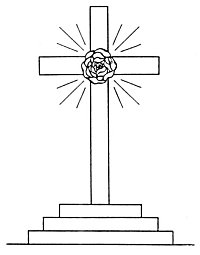
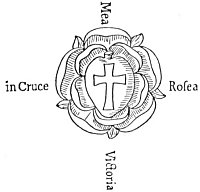
Rosicrucian Doctrines and Tenets
Three goals hidden behind fourteen chapters of doctrine
The big ideaHall argues that the Rosicrucians pursued three specific aims (political reform, scientific reformation, and universal medicine) hidden behind layers of deliberate misdirection.
Hall begins by admitting that reliable information about Rosicrucian beliefs is almost impossible to find. He describes two bodies within the Order: an inner group that never revealed itself, and an outer body that published confusing manifestoes on purpose. He then summarizes the Confessio Fraternitatis in fourteen chapters. The Confessio argues that worldly philosophy is about to collapse, that the Fraternity holds a divinely revealed cure, and that only the sincere may find it. It warns that the unworthy will cry out for gold and never be heard.
Hall then lists the three declared objects of the Fraternity. First, the abolition of monarchies and their replacement with rule by enlightened philosophers. Hall claims the Rosicrucians instigated the American Revolution and left the Great Seal of the United States as their memorial. Second, the reformation of science and philosophy by restoring the ancient Mysteries. Third, the discovery of a Universal Medicine capable of healing all diseases. He cites Elias Ashmole's claim that Queen Elizabeth was twice cured of smallpox by Rosicrucian physicians.
Hall also covers the symbolism of the rose and cross, arguing that both are phallic emblems pointing to regeneration on a higher level. John Heydon and Thomas Vaughan are quoted describing Rosicrucian adepts who could turn invisible, walk through air, and cure plague. Three mountains of spiritual progress (Sophia for philosophy, Qabbalah for angelic language, Magia for divine language) are described as the sequential stages of Rosicrucian initiation.
“The Fraternity of R.C. is an august and sovereign body, arbitrarily manipulating the symbols of alchemy, Qabbalism, astrology, and magic to the attainment of its own peculiar purposes, but entirely independent of the cults whose terminology it employs.”
describes the Fraternity's relationship to other occult systems
Key ideas
- Two Rosicrucian bodies: an inner order and an outer one that published deliberate misdirection.
- Three goals: abolish monarchy, reform science and philosophy, discover Universal Medicine.
- Hall claims Rosicrucians instigated both the American and French Revolutions.
- Queen Elizabeth allegedly cured of smallpox twice by Rosicrucian brethren.
- Three mountains of initiation: Sophia (philosophy), Qabbalah (angels), Magia (divine language).
- Rose and cross are phallic symbols elevated to represent spiritual regeneration, not physical generation.
- IMount SophiaPhilosophy; knowledge of Nature's workings above the senses
- IIMount QabbalahLanguage of angels; conversation with messengers of God
- IIIMount MagiaDivine Magic; God teaches man the true nature of all things
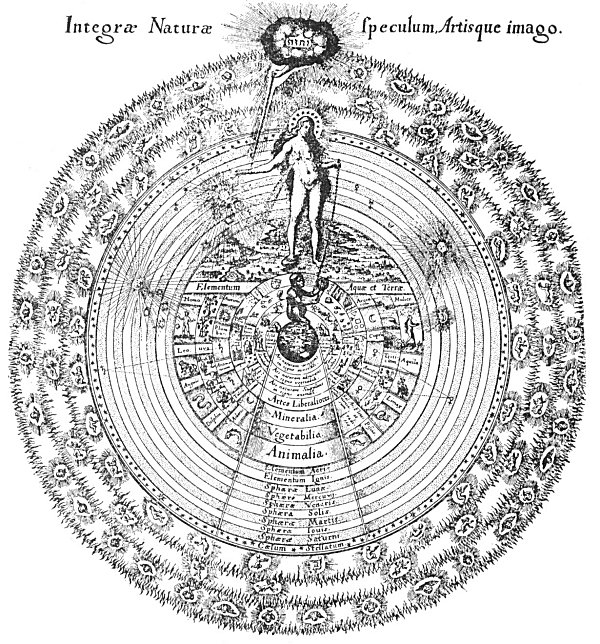
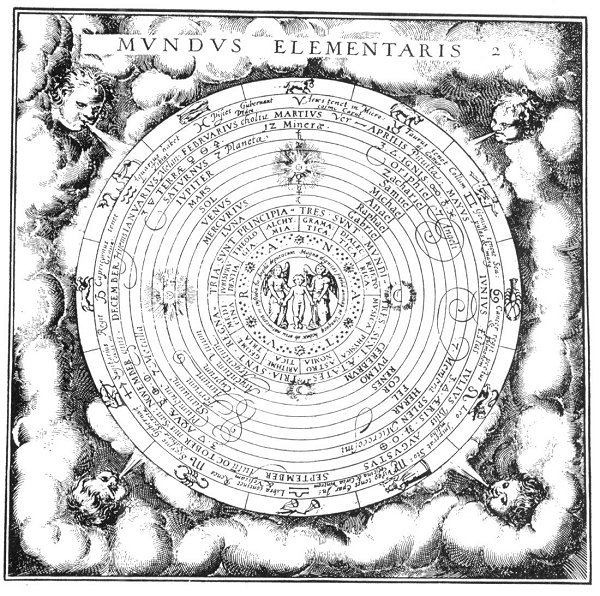
Fifteen Rosicrucian and Qabbalistic Diagrams
Lucifer, the cube, and fifteen secret maps of creation
The big ideaHall presents fifteen diagrams from von Welling's rare 1735 work as authentic Rosicrucian cosmological charts, arguing they uniquely reveal Lucifer's true role in forming the material universe.
Hall describes fifteen diagrams taken from Georgius von Welling's extremely rare book on Salt, Sulphur, and Mercury, published in 1735. He notes that Lucifer is represented by the number 741 and that these plates reveal his true identity more plainly than any other source. Table I shows the Ptolemaic cosmos: an outer ocean of Schamayim (the divine fiery water), then seven Spiritual Intelligences, then subtle air, earth's surface, a region called Ares, subterranean air, and a central fire. Figures 2 through 9 represent elemental and spiritual forms of water, air, earth, and fire before Lucifer's descent.
Table II explores elemental symbols. The cube represents earth and salt. It has six faces matching the six days of creation, six pyramids meeting at the center, and twelve bodies, producing the magical number 72. Table III diagrams the seven days of creation in concentric rings with globes. Table IV is called the symbolic tomb of C.R.C. It shows the divine outflow descending from God through Saturn's throne to the point of Lucifer, from which light irradiates through twelve zodiacal orders. Table V shows the same system after Lucifer's descent: his world becomes a contracted disc and Chaos comes into being.
Tables VI through XV cover the chaos of Lucifer's fall, the separation of light and darkness, the solar system, and the New Jerusalem as a cube with the twelve tribes inscribed on its twelve lines. Table XIII contains the Ain Soph, the Incomprehensible Abyss of Divine Majesty, and a circle reading: Lucifer the Son of the Aurora of the morning. Table XV Figure 10 represents completion of the process of regeneration and the consummation of the Great Work.
“Lucifer is the greatest mystery of symbolism. The secret knowledge of the Rosicrucians concerning Lucifer is nowhere so plainly set forth as in these plates, which virtually reveal his true identity, a carefully guarded secret about which little has been written.”
introduces the central theme of von Welling's fifteen diagrams
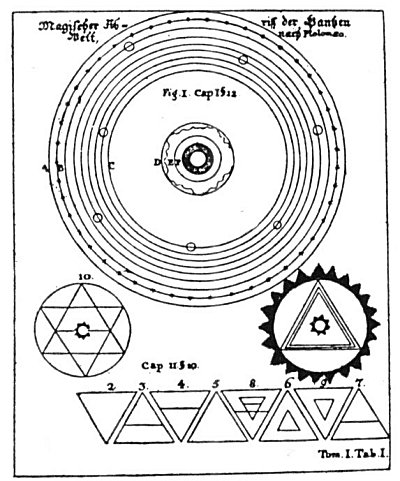
Key ideas
- Fifteen diagrams from von Welling's 1735 work are the most authentic Rosicrucian cosmological texts known.
- Lucifer is represented by the number 741; his fall creates Chaos and the material universe.
- The cube of salt has 12 bodies, 6 pyramids, and produces the magical number 72.
- Table IV is the symbolic tomb of C.R.C., showing divine outflow through Saturn to Lucifer.
- Schamayim is the divine fiery water surrounding all things; souls enter the world through fixed stars.
- The New Jerusalem (Table X) is a cube with twelve tribes inscribed on its twelve lines.
- ISchamayimDivine fiery ocean surrounding all created things
- IISeven Spiritual IntelligencesDivine Planets; souls enter the lower world through fixed stars
- IIISubtle Spiritual AirSubdivision of ether between divine and elemental spheres
- IVThe ReservoirSurface of earth and sea; receives impressions from both above and below
- VAres / Virgin EarthGathering of waters; alchemical quicksand foundation of solid earth
- VISubterranean AirDenser ether where stellar impulses crystallize into corporeal spirits
- VIICentral FireCoarse fire at the core of elemental earth; opposite of divine Schamayim
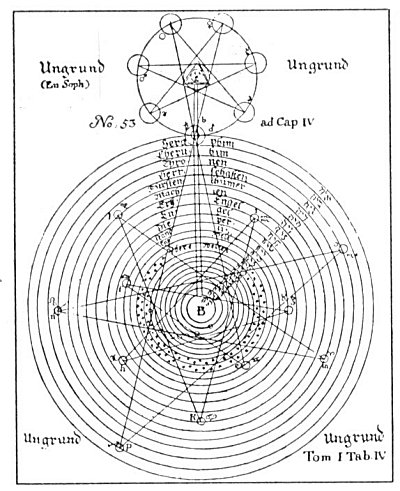
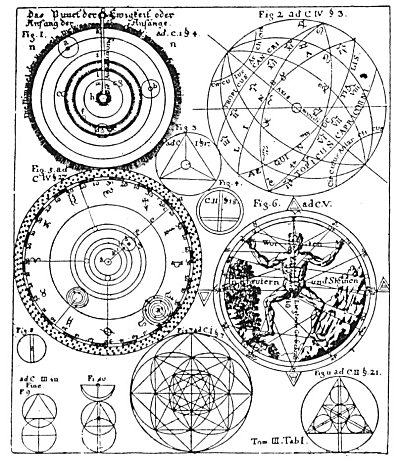
Alchemy and Its Exponents
Four alchemists who spent lifetimes seeking the Great Arcanum
The big ideaHall argues that the historical record of alchemy is too vast and credible to dismiss, and profiles four Grand Masters (Paracelsus, Raymond Lully, Nicholas Flammel, and Count Bernard) as representative of the serious seekers.
Hall opens by challenging the modern dismissal of alchemy. He argues that hundreds of reliable witnesses to metallic transmutation, spread over two thousand years, cannot all be liars or fools. He cites Albert Pike's endorsement of Hermetic gold as mathematically real, and notes that William and Mary repealed Henry IV's law against multiplying metals in 1689, after which they encouraged alchemical study. Hall also lists dozens of famous alchemists, noting that King Solomon and Pythagoras were reputed to have practiced the art.
The longest profile belongs to Paracelsus (1493-1541), who traveled Europe and Russia, received the Hermetic secret at Constantinople from Arabian adepts, and returned to reform European medicine. He wrote in the common language instead of Latin, cured leprosy and cancer, and was probably murdered by professional enemies. Raymond Lully (born around 1235) converted from courtly pleasure after seeing a noblewoman's cancer, learned alchemy from Arnold of Villa Nova, and allegedly transmuted 50,000 pounds of quicksilver, lead, and tin into gold in the Tower of London for King Edward II.
Nicholas Flammel, a Parisian manuscript illuminator, purchased the Book of Abraham the Jew for two florins and spent years deciphering its hieroglyphic figures. With his wife Perrenella he eventually worked out the formula and before his death carved it on an arch at St. Innocent's churchyard. Count Bernard of Treviso searched for the Philosopher's Stone from age 14, spent vast fortunes, and finally succeeded at age 76, declaring his discovery worth the lifetime spent searching.
“Study what thou art, whereof thou art a part, what thou knowest of this art, this is really what thou art. All that is without thee also is within, thus wrote Trismosin.”
Solomon Trismosin, Paracelsus's reputed early teacher, on the inner nature of alchemy
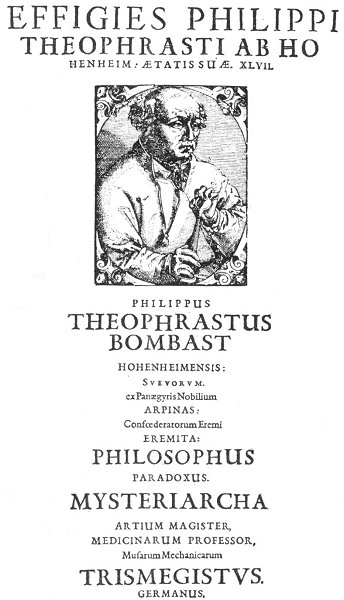
Key ideas
- William and Mary repealed Henry IV's ban on metal multiplication in the first year of their reign, 1689.
- Paracelsus received Hermetic secrets from Arabian adepts in Constantinople around 1513.
- Raymond Lully allegedly transmuted 50,000 pounds of base metals into gold for England's Edward II.
- Nicholas Flammel decoded the Book of Abraham the Jew and carved its formula on a Paris churchyard arch.
- Count Bernard of Treviso searched 62 years (age 14 to 76) before succeeding.
- Alchemists often used fictional personas like John Cremer, Abbot of Westminster, to preserve their secrets.
- IRaymond LullyBorn ~1235; transmuted metals for England's Edward II; died 1315
- IINicholas FlammelParis scrivener, 1380s; decoded Book of Abraham the Jew
- IIICount Bernard of TrevisoBorn 1406; 62-year search ended in success at age 76
- IVParacelsusBorn 1493; reformed medicine; received Hermetic secret in Constantinople
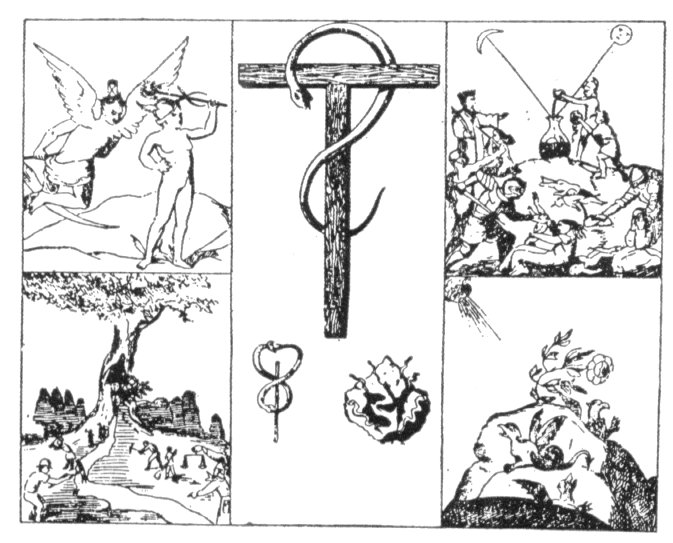
The Theory and Practice of Alchemy: Part One
Gold, seeds, and the threefold science of multiplication
The big ideaHall argues that alchemy operates simultaneously in spiritual, mental, and material worlds, and that the same law of growth governing the soul also governs metals, making transmutation as natural as germination.
Hall traces alchemy to Khem, the ancient name for Egypt, and argues that both alchemy and chemistry descend from it. He describes three theories of alchemy's origin: divine revelation through Hermes Trismegistus and his Emerald Tablet, instruction by the fallen angels of Enoch, and preservation by the Atlantean priestcraft after their continent sank. He retells the story of Alexander the Great visiting the Trees of the Sun and Moon, whose messages foretold his death by poison within a year and eight months. Hall argues that the Philosopher's Stone's secrets traveled from Atlantis to Egypt and then to Europe.
Hall presents alchemy as a threefold art, symbolized by a triangle: 3 times 3 equals 9, the number of esoteric man. The three substances (mercury, sulphur, and salt) each contain the other two, making nine divisions plus Azoth, equaling the sacred decad of Pythagoras. These substances correspond in four worlds: God (Father, Son, Holy Ghost), Man (Spirit, Soul, Body), Elements (Air, Fire, Water), and Chemicals (Mercury, Sulphur, Salt). Twelve foundations result from three substances in four worlds, matching the twelve foundation stones of Revelation. Samuel Norton's fourteen steps and twelve zodiac signs each map one stage of the alchemical process.
The core argument is that growth by natural law and growth by art are the same process at different speeds. Every grain of sand contains seeds of all metals and gems. The alchemist who knows the art can cause gold to germinate from its own seed inside base metals quickly, just as nature takes millions of years to turn carbon into diamonds. Hall warns that the Magnum Opus requires inner regeneration first: without the secret life principle within the alchemist himself, the formula will always fail.
“The true philosopher, desiring to accomplish the Magnum Opus, patterns his conduct according to the laws of Nature, recognizing that the art of alchemy is merely a method copied from Nature but with the aid of certain secret formulæ greatly shortened by being correspondingly intensified.”
on the relationship between art and Nature in alchemical work
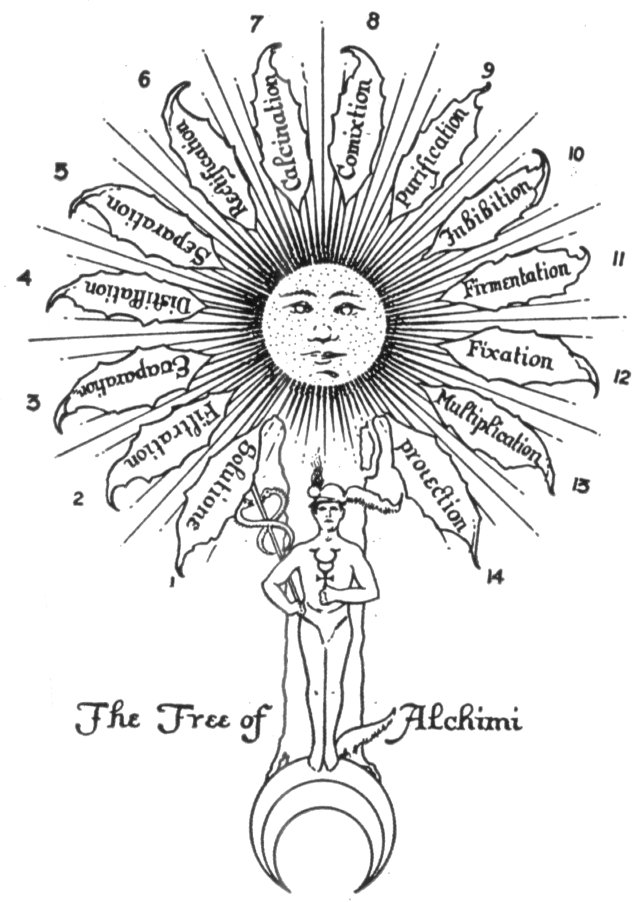
Key ideas
- Alchemy originated in Egypt (Khem); both alchemy and chemistry preserve the name in their roots.
- Three substances: mercury, sulphur, and salt, each containing the other two, form nine plus Azoth equal 10.
- Three substances in four worlds produce 12 foundations, matching Revelation's twelve foundation stones.
- Samuel Norton's fourteen steps run from Solution to Projection; twelve zodiac signs map one step each.
- The Magnum Opus requires inner regeneration first; material skill alone will always fail.
- Hartmann identifies the Song of Solomon as a concealed alchemical formula, process by process.
- 1Aries Calcination: reduce to powder by heat
- 2Taurus Congelation: solidify or congeal the substance
- 3Gemini Fixation: fix the volatile into a stable form
- 4Cancer Dissolution: dissolve into liquid
- 5Leo Digestion: slow heating to mature the substance
- 6Virgo Distillation: separate volatile from fixed
- 7Libra Sublimation: volatilize and recondense
- 8Scorpio Separation: divide components apart
- 9Sagittarius Incineration: burn to ash
- 10Capricorn Fermentation: introduce ferment to transform
- 11Aquarius Multiplication: increase the tincture's power
- 12Pisces Projection: cast tincture on base metal to transmute
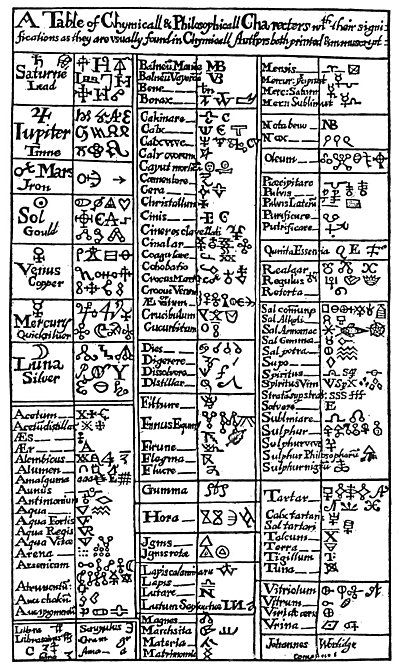
The Theory and Practice of Alchemy: Part Two
Emerald Tablet, invisible mountain, and the philosopher of Leyden
The big ideaHall presents the Emerald Tablet of Hermes, the Rosicrucian letter on the Invisible Mountain, and a step-by-step deathbed formula for the Philosopher's Stone as converging evidence that alchemical knowledge was passed in secret by a chain of illuminated adepts.
Hall opens with an alchemical prayer, then describes how adepts secretly transmitted the Magnum Opus from master to philosophical son. He says great alchemists of the 16th through 18th centuries were kept alive by drops of their elixir and appeared and disappeared across Europe. He then reproduces Dr. Bacstrom's translation of the Emerald Tablet. The Tablet opens: IT IS TRUE, NO LIE, CERTAIN. Hall interprets it as a process: the Azoth rises from the alchemical vessel, circulates through solar atoms, and eventually putrefies into black matter called the Toad, before turning white and then red.
He reproduces the Rosicrucian letter about the Invisible Mountain from Eugenius Philalethes's 1651 Lumen de Lumine. The letter describes a mountain in the center of the earth, guarded by beasts and birds, reachable only in darkness through prayer, with an unrecognized guide. The seeker faces wind, earthquake, and fire before dawn reveals a Day-Star and a tincture that heals all disease, makes the old young, and produces pearls of incomparable quality. Hall suggests this is both an alchemical formula and an initiatory ritual.
The longest section is a deathbed testament from an anonymous philosopher of Leyden, dated 1662. He describes collecting dew in May or June at the full moon with an east wind, dissolving sea salt in the dew water, then cycling the mixture through repeated putrefaction and coagulation over 40-day periods until a fixed white salt appears. Further work with gold dissolved in this Mercury produces a red tincture that, after five augmentations, transmutes one part to 100,000 parts of base metal. Von Welling adds that this same salt cures all physical disease of mankind.
“IT IS TRUE, NO LIE, CERTAIN, AND TO BE DEPENDED UPON, THE SUPERIOR AGREES WITH THE INFERIOR, AND THE INFERIOR WITH THE SUPERIOR, TO EFFECT THAT ONE TRULY WONDERFUL WORK.”
Opening lines of the Emerald Tablet of Hermes, from Bacstrom's translation
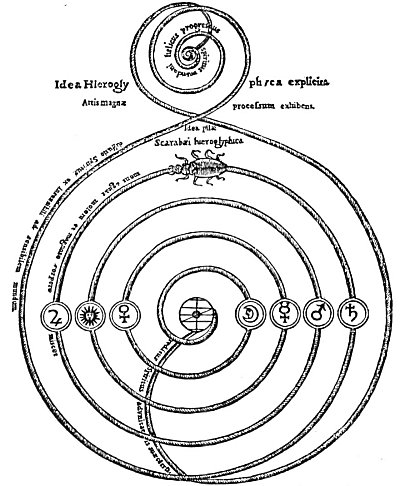
Key ideas
- The Emerald Tablet declares: the Superior agrees with the Inferior; Chiram is One in Essence but Three in Aspect.
- Adepts passed the secret person-to-person; each chose one philosophical son before death.
- The Invisible Mountain letter describes five stages: wind, earthquake, fire, calm, and dawn.
- Dew collected at the full moon in May or June with an east wind is the starting material for the formula.
- The Leyden philosopher's tincture after five augmentations transmutes one part to 100,000 parts of base metal.
- Von Welling states the universal salt in watery form cures all physical diseases of mankind.
- IDarkness and PrayerSeeker departs at midnight; unrecognized guide appears
- IIWindVehement wind shatters rocks; lions and dragons appear; do not retreat
- IIIEarthquakeOverthrows what wind left; flattens all; do not fall off
- IVFireConsumes earthly rubbish; treasure is near but still hidden
- VDawn and TreasureDay-Star rises; tincture revealed; heals disease, makes old young
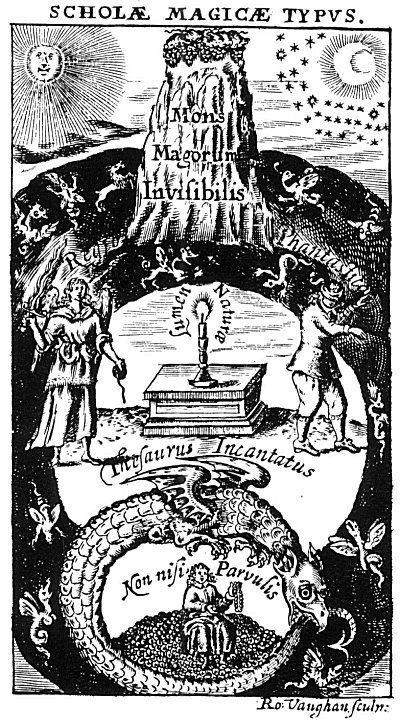
The Hermetic And Alchemical Figures of Claudius De Dominico Celentano Vallis Novi
A 1606 Naples Manuscript Shows the Great Work
The big ideaHall presents 26 illustrated leaves from a 1606 Neapolitan alchemical manuscript as a visual guide to the Great Work of human spiritual transformation, not physical gold-making.
The manuscript was written and illuminated in Naples in 1606 by Claudius de Dominico Celentano Vallis Novi. Hall says the text is as enigmatic as its diagrams, but together they show the alchemical Great Work. An unknown annotator called it one of the most important Rosicrucian and Masonic documents ever found, noting that no similar item had turned up in German museums or libraries.
Hall describes ten alchemical bottles marking stages of the Work. The first two hold quicksilver. The third shows 'Blackness through the Head of the Raven.' The fourth is pure black, its contents 'submerged in Chaos.' Later bottles show the substance turning white, then rose, and finally a blood-red Elixir fills the tenth bottle. The annotator states the Work treats the change in human beings, not the production of gold.
The 26 illustrated leaves feature figures drawn from Hermes, Morienus, Bernard of Treviso, Aristotle, and Paracelsus. Hall describes a king and queen expecting a son, a sun-bird battling an earth-serpent, a ladder for matter ascending to spirit, and a fount yielding white and red Mercuries. The author cites Thomas Aquinas, Raymond Lully, and Arnold of Villa Nova as main sources. Hall adds that medieval alchemists used Christian language as protective cover; their real knowledge came from Egyptian and Arabian adepts.
“Throughout it treats of the change in human beings and not of the making of gold.”
Annotator's statement of the manuscript's true subject
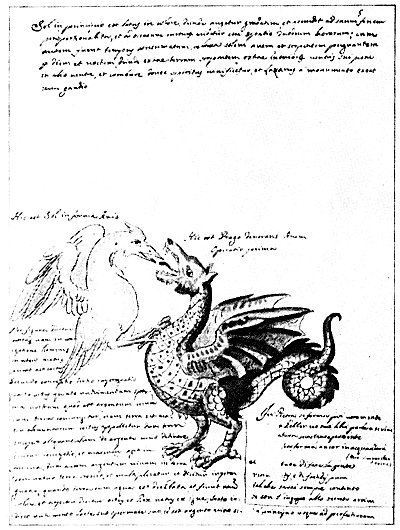
Key ideas
- Ten bottles trace alchemical stages from blue quicksilver to blood-red Elixir
- 26 leaves feature figures of Hermes, Morienus, Bernard of Treviso, and Paracelsus
- The Great Work treats human spiritual transformation, not physical gold production
- Sources cited: Thomas Aquinas, Raymond Lully, and Arnold of Villa Nova
- Arabian and Egyptian adepts supplied true knowledge; Christian terms were protective cover
- Alchemy and Qabbalism share a common goal: the mystery of human regeneration
- IFirst QuicksilverBlue-gray liquid; golden shrub with three blossoms
- IISecond QuicksilverFour golden flowers; make spirit of the body
- IIIRaven EmergingBlack bottle; tincture hidden in the air like the soul
- IVHead of RavenPure black; earth submerged in Chaos
- VSixth Raven's HeadWorms born at the bottom of the vessel
- VISeventh Raven's HeadNewly born black son called Elixir
- VIIMany ColorsBody, soul, and spirit joined, then turned to ashes
- VIIIGreat WhitenessTransparent liquid; the black clouds are past
- IXBlanching to RedWhite rose says: He who blanches me makes me red
- XConsummationBlood-red Elixir; red rose of extreme beauty
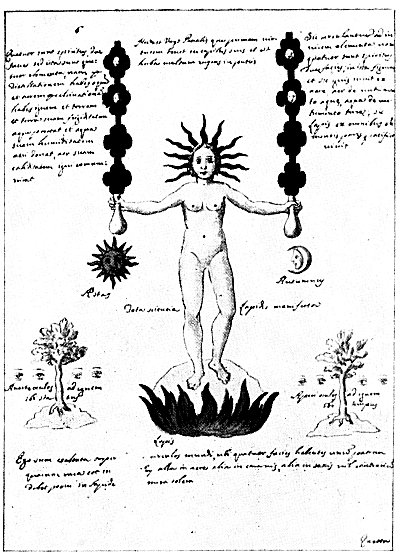
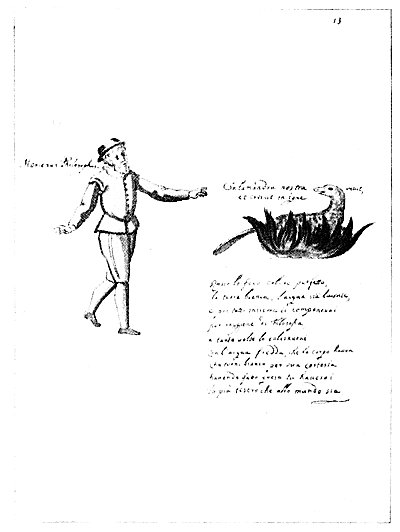
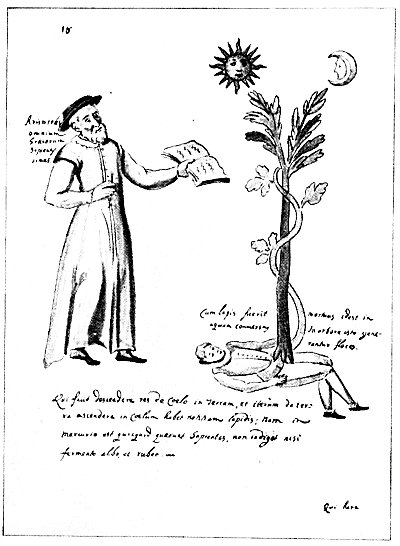
The Chemical Marriage
Seven Days That Decode the Rosicrucian Initiation
The big ideaHall describes the seven-day narrative of Johann Valentin Andreae's allegorical work as a symbolic account of alchemical purification, planetary initiation, and the soul's reunion with its divine source.
Johann Valentin Andreae published The Chemical Marriage in 1616, though he claims to have written it as a youth of fifteen or sixteen. Hall says it is the third of the original Rosicrucian manifestoes and contains the earliest known reference to Christian Rosencreutz. The story follows an aged man, Father C.R.C., who receives a royal wedding invitation and undergoes a seven-day symbolic ordeal.
The narrative moves through seven days. On Day 1, C.R.C. dreams of being freed from a dungeon by a rope lowered seven times. On Day 2, he passes through three castle gates and receives tokens. On Day 3, he passes a soul-weighing ceremony on golden scales. On Day 4, six royal persons are beheaded at midnight and their blood collected in goblets. On Days 5 and 6, the bodies are transported to the Tower of Olympus, dissolved, hatched from a white egg as an ugly bird, and ultimately formed into two homunculi who are ensouled through trumpets in a dome. On Day 7, all wedding guests are made Knights of the Golden Stone and sworn to five articles.
Hall interprets the work as an alchemical allegory. The three kings represent the threefold spirit of man; their consorts are vehicles of expression in the lower world. The floors of the Tower of Olympus correspond to planetary orbits, paralleling the Eleusinian Mysteries and Mithraic ladder rites. The resurrected young King and Queen represent Intelligence and Love.
“He who masters the seven worlds and is reunited with the Divine Source of his own nature consummates the Hermetic Marriage.”
Hall's summary of the Chemical Marriage's central teaching
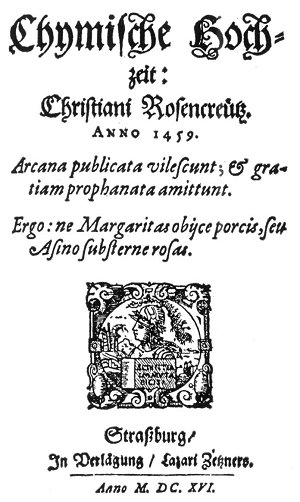
Key ideas
- C.R.C. passes gold scales on Day 3; he outweighs even three men hanging on the opposite end
- Six royal persons beheaded on Day 4; dissolved, re-formed as two homunculi, ensouled on Day 6
- Tower of Olympus has 8 floors; 4 privileged workers use the 8th for the true resurrection
- Knights of the Golden Stone swear 5 articles: honor God, abhor vice, help the worthy, avoid worldly power, accept mortality
- Seven days mirror planetary initiation stages in the Eleusinian Mysteries and rites of Mithras
- IDay 1: InvitationStorm, angel with trumpet, wedding letter in gold
- IIDay 2: Three GatesFour forest paths; three tokens earned entering castle
- IIIDay 3: ScalesSoul weighing; elect receive Golden Fleece and Flying Lion
- IVDay 4: BeheadingSix royals beheaded by Moor executioner; bodies in coffins
- VDay 5: Sea JourneyCoffins carried to Tower of Olympus on seven ships
- VIDay 6: ResurrectionBodies dissolved; egg hatched; two homunculi ensouled
- VIIDay 7: KnighthoodKnights of the Golden Stone; C.R.C. becomes castle porter
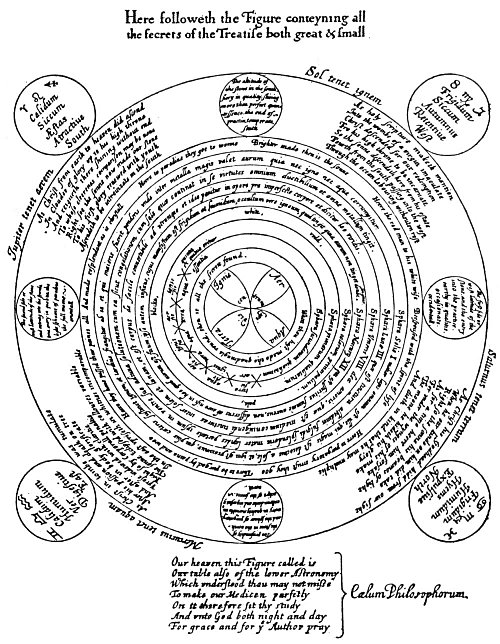
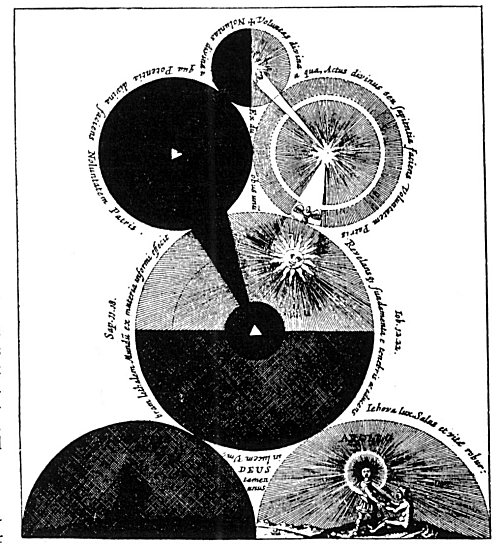
Bacon, Shakspere, and the Rosicrucians
Francis Bacon Hid Rosicrucian Secrets in Shakespeare
The big ideaHall argues that Sir Francis Bacon, a Rosicrucian initiate, was the true author of the Shakespearean plays and embedded secret teachings in them through elaborate cipher systems that have yet to be fully decoded.
Hall opens with a case against William Shakspere of Stratford as the plays' author. Only six signatures survive, all scrawling and uncertain. His will mentions no books, manuscripts, or literary properties. His daughter Judith could not write at age 27. Ben Jonson, who knew him well, said Shakspere had 'small Latin and less Greek.' While supposedly at the peak of his literary career, Shakspere was buying malt and suing a townsman named Philip Rogers for two shillings.
Hall describes Francis Bacon as a Rosicrucian initiate, editor of the King James Bible, father of modern science and democracy, and likely founder of modern Freemasonry. Bacon's cipher number was 33: the word 'Francis' appears exactly 33 times on a single page in King Henry IV, Part 1, requiring noticeably awkward sentences to achieve the count. In The Tempest, Act 1, Scene 2, the first letters of three lines spell 'BACon.' Bacon also used the biliteral cipher, hiding messages in two nearly identical type fonts that require a magnifying glass to distinguish.
Hall concludes that a secret fraternity preserved ancient wisdom in two ways: through Freemasonry for initiates and through cryptographic writings hidden in popular literature. Bacon was the focal point between this invisible institution and the world. Solving the Bacon-Shakspere-Rosicrucian riddle, Hall says, may recover the lost wisdom of antiquity and reveal the true origin of Freemasonry.
“The Bacon-Shakspere controversy, as its most able advocates realize, involves the most profound aspects of science, religion, and ethics; he who solves its mystery may yet find therein the key to the supposedly lost wisdom of antiquity.”
Hall's statement of what the Bacon-Shakspere riddle ultimately conceals
Key ideas
- Shakspere's 6 surviving signatures all scrawl; will omits books, manuscripts, and plays entirely
- Bacon's cipher number 33: 'Francis' appears exactly 33 times on one Henry IV page
- Acrostic in The Tempest Act 1 Scene 2 spells 'BACon' across first letters of three lines
- Biliteral cipher uses two near-identical type fonts; 5 cover letters encode 1 hidden letter
- The word 'honorificabilitudinitatibus' in Love's Labour's Lost is a Rosicrucian signature (value 287)
- 1Ancient Mysteries Pagan philosophers possessed arcane knowledge of nature
- 2Rosicrucian Order Small group entrusted with perpetuation after mysteries faded
- 3Bacon as Linchpin Focal point between invisible fraternity and the world
- 4Cipher Writings Biliteral, acrostic, and numerical codes hidden in Folios
- 5Freemasonry Outer organization transmitting symbols to qualified initiates
- 6Future Rediscovery Qualified decoder will unlock the lost wisdom of antiquity
The Cryptogram as a Factor in Symbolic Philosophy
Seven Cipher Types Used to Hide Ancient Wisdom
The big ideaHall argues that ancient and medieval philosophers used seven distinct types of cryptogram to preserve sacred knowledge from the uninitiated, and that understanding these ciphers is essential for recovering the lost arcana of philosophy and religion.
Hall opens by arguing that modern scholars have ignored the role of cryptography in philosophy and religion. Ancient Mystery schools developed sacred languages and alphabets known only to initiates. Parables in the Bible, Homer, Virgil, Plato, and Apuleius are what Hall calls 'acroamatic' ciphers, each capable of seven levels of interpretation. The uninitiated accept the moral reading; the seventh and highest level is complete and all-inclusive.
Hall describes Francis Bacon's biliteral cipher in technical detail. The cipher uses two nearly identical Roman type fonts; five cover letters encode one hidden letter, designated 'a' or 'b' based on subtle differences in loop size, stroke weight, or ornamental flourishes. Hall walks through the full decipherment of the sentence 'Wisdom and understanding are more to be desired than riches,' converting each letter to a or b, grouping in fives, consulting the biliteral alphabet table, then passing the extracted letters through a wheel cipher. The result is 'All is well.' Hall notes the 1623 Shakespeare Folio contains many font variations and may hold dozens of such hidden messages.
Hall then surveys five more cipher types: numerical (Bacon's name equals 33; mispagination in the Folio at pages 89, 189, and 289), musical (John Wilkins's 1641 system of notes substituting for letters), pictorial (architectural proportions and artistic distortions encoding hidden figures), arbitrary (letter-substitution systems defeated by frequency analysis), and code (telegraph-style punctuation). He concludes that every student of symbolism needs a working knowledge of cryptography.
“Forms are the symbols of formless divine principles; symbolism is the language of Nature.”
Hall's definition of the role of symbols in esoteric philosophy
Key ideas
- Biliteral cipher: 5 cover letters encode 1 hidden letter using two nearly identical type fonts
- Acroamatic cipher: parables like those in the Bible contain 7 levels of interpretation
- Sentence 'Wisdom and understanding...' decodes via biliteral plus wheel cipher to 'All is well'
- Numerical cipher: Bacon's name equals 33; page-89 anomalies appear across multiple Bacon-era books
- Musical cipher described by John Wilkins in 1641 substitutes notes for alphabet letters
- Pictorial cipher: extra fingers in Raphael paintings and distorted coats are hidden cryptograms
- ILiteralBiliteral fonts, acrostic initials, letter substitution
- IIPictorialShapes, proportions, or artistic distortions encode meaning
- IIIAcroamaticParables and allegories with up to 7 interpretation levels
- IVNumericalNumbers replace letters; Bacon used his name-value 33
- VMusicalNotes substitute for alphabet letters in composition
- VIArbitraryHieroglyphic figures for letters, defeated by frequency count
- VIICodeMorse-like dots and dashes hidden in punctuation marks
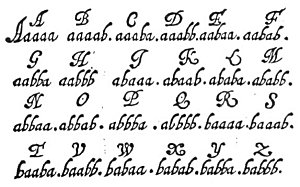
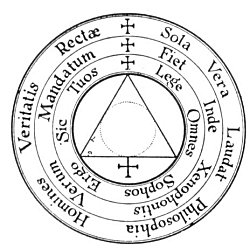
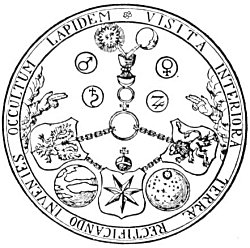
Freemasonic Symbolism
From Lameck's Children to Solomon's Three Temples
The big ideaHall traces Freemasonry's origins from pre-Flood builders and the Dionysiac Architects of ancient Greece through the Temple of Solomon, arguing that its symbols preserve a universal spiritual science aimed at perfecting humanity.
Hall opens with a 1701 Masonic Constitution tracing the arts and sciences to the four children of Lameck: Jaball (geometry), Juball (music), Tubal-cain (smithcraft), and Naamah (weaving). They inscribed their knowledge on two pillars -- marble and brass -- so it would survive the Flood. Enoch, whose 365-year lifespan marks him as a sun figure, built nine underground vaults and placed a golden delta bearing the Name of God in the deepest one. Hall also notes that King Henry VI's manuscript identifies 'Peter Gower, a Grecian' as the man who brought Masonry to England -- easily identified as Pythagoras, whose lodge at Groton is Crotona.
The Dionysiac Architects, Hall says, appeared no later than 1000 B.C. They were secret initiates of the Bacchus-Dionysos cult governed by Masters and Wardens, employed in building the Temple of Diana at Ephesus and possibly Solomon's Temple. Their greatest member was Vitruvius, whose De Architectura codified the proportions of the human body as the template for sacred architecture: the face is one-tenth of total height; the hand equals the face; the foot is one-sixth of the height. Their checkerboard tracing board became the modern Masonic lodge floor.
Hall argues that Solomon is a symbolic name: SOL-OM-ON means light, glory, and truth. He describes three symbolic temples: the cosmic Temple (the sun as king, twelve zodiac signs as Fellow-Craftsmen), the human body, and the invisible Soular House cast by CHiram Abiff. Freemasonry, he concludes, preserves in its symbols the arcana of Egyptian, Greek, Hebrew, and Christian Mysteries.
“It seemed to me like the Pyramids in their loneliness, in whose yet undiscovered chambers may be hidden, for the enlightenment of coming generations, the sacred books of the Egyptians, so long lost to the world.”
Albert Pike on Freemasonry's symbolic heritage, quoted by Hall
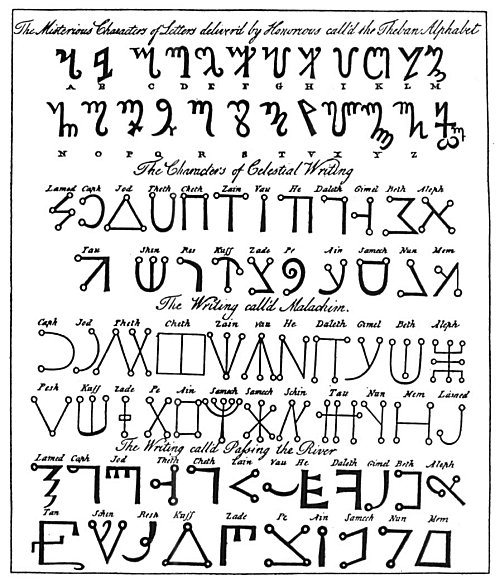
Key ideas
- Enoch built 9 underground vaults; gold delta inscribed with God's Name placed in deepest vault
- Dionysiac Architects existed by 1000 BC; built Temple of Diana at Ephesus and Solomon's Temple
- Peter Gower who spread Masonry is Pythagoras; his lodge at Groton is Crotona, Italy
- Vitruvius: face is 1/10 of body height; foot is 1/6; symmetry is the basis of temple design
- SOL-OM-ON symbolizes light, glory, and truth; three temples are the cosmos, the body, and the soul
- ICosmic TempleUniverse as house; sun as king; 12 zodiac as Fellow-Craftsmen
- IIHuman BodyPaul: know ye not that ye are the temple of God
- IIISoular HouseInvisible fiery body cast by CHiram Abiff into clay mold
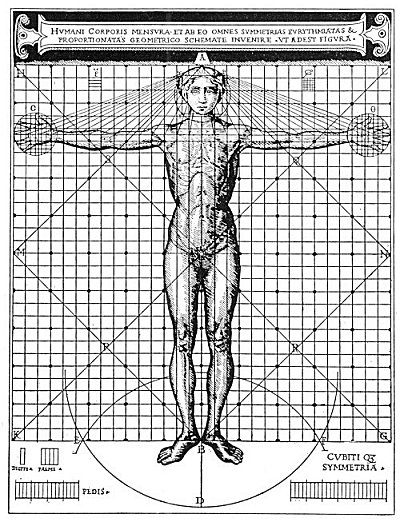
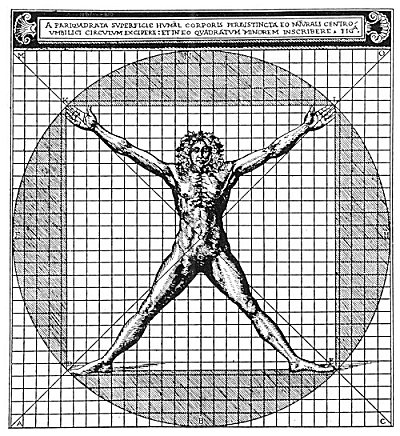
Mystic Christianity
Jesus the Essene Initiate Behind the Gospel Symbols
The big ideaHall argues that Jesus was an Essene initiate trained in ancient Mystery teachings, that the Gospel narrative is symbolic rather than literal, and that the Christ story describes the divine Christos latent within every human being.
Hall opens by asserting that the true story of Jesus was never recorded in the Gospels or Apocrypha. He cites Irenaeus, Bishop of Lyons (c. A.D. 180), who claimed on apostolic authority that Jesus lived to old age, well past fifty, contradicting the traditional 33-year life span. Justin Martyr, writing in the second century, openly told pagan audiences that Christianity's story was not different from those of Jupiter's sons. Hall also notes that the monogram IHS derives from the Greek numerical value 608, the sacred name of Bacchus.
Hall proposes that Jesus was born of Essene parents, reared and educated by the Essenes, and initiated in the same temple of Melchizedek where Pythagoras had studied six centuries earlier. The Essenes were a three-degree Mystery school near the Dead Sea. Their name derives from the Syrian word for 'physician.' They lived by farming, carpentry, and pottery, and their symbols included builders' tools, making them, Hall says, a forerunner of Freemasonry. Hall distinguishes Jesus from the Christos: the Christos is the divine spark latent in every person. Jesus preached it but was later confused with it. To be 'Christened' meant to reunite with this inner divine Self.
The chapter closes with the Arthurian cycle. Hall identifies Arthur as the sun, his twelve knights as the zodiac, and Excalibur as the spirit withdrawn from the base metals of the lower nature. Joseph of Arimathea carried the Grail to Britain and founded Glastonbury Abbey. The Holy Grail itself connects to the communion cups of Adonis, Atys, and Bacchus, making it a universal rather than purely Christian symbol.
“He who attained reunion with his Christos was consequently termed a Christian, or Christened, man.”
Hall's definition distinguishing the historical Jesus from the inner Christos
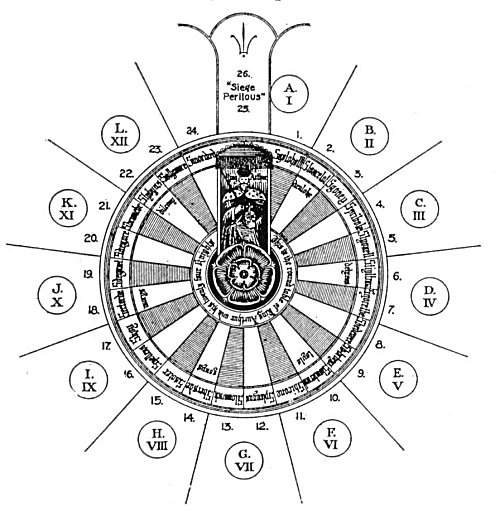
Key ideas
- Irenaeus (A.D. 180) cited apostolic testimony that Jesus lived past 50, not just 33 years
- IHS derives from the Greek numerical value 608, the sacred concealed name of Bacchus
- Essenes were a 3-degree order of healers and farmers; Joseph and Mary were probable members
- Christos = divine spark in every person; Jesus preached it but was later confused with it
- Arthur's 12 or 24 knights = zodiac signs; Round Table = universe; Siege Perilous = perfect man
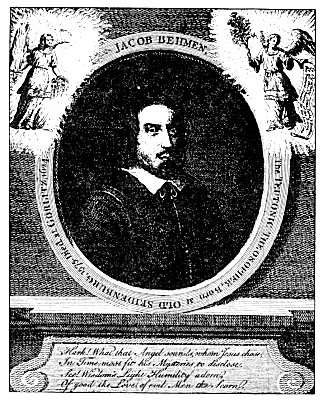
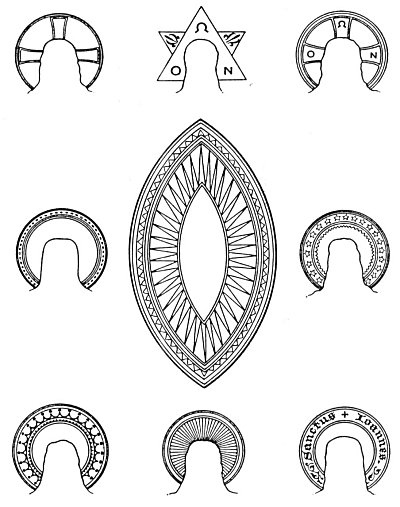
The Cross and the Crucifixion
Every civilization's secret symbol of sacrifice and life
The big ideaHall argues that the cross is a universal sacred symbol found in all ancient cultures, and that crucifixion stories appear in dozens of religions long before Christianity.
Hall opens with the legend of the Holy Cross, tracing the wood from Adam's burial through Seth's visit to Eden, Moses's burning bush, Solomon's Temple, and finally to the cross at Calvary. He argues this legend shows the cross as a cosmic thread running through all human history. He then surveys the cross symbol across the ancient world, finding it in Japan, China, India, Tibet, Egypt, Chaldea, and among the Aztec and Maya peoples.
Hall describes three forms of the cross: the Tau (T-shape), the Crux Ansata (Tau topped with an oval, symbol of life in Egypt), and the familiar Roman cross. He says the Tau was used in the Mysteries of Mithras and in Ezekiel's mark on foreheads. The Crux Ansata measured the Nile's floods and stood for immortality. Each material of the cross symbolized something different: gold for illumination, silver for purification, wood for aspiration.
Hall then lists a long roster of crucified saviors before Jesus: Prometheus, Bacchus, Christna, Mithras, Quetzalcoatl, Osiris, and others. The Mexican god Quetzalcoatl is shown crucified in the Codex Borgianus, sometimes with two thieves beside him. Hall says the crucifixion story reflects a universal cosmic truth about the divine nature of man being nailed to the animal body, and that the four arms of the cross represent the four elements: earth, water, fire, and air.
“Saviors unnumbered have died for the sins of man and by the hands of man, and through their deaths have interceded in heaven for the souls of their executioners.”
Opening Hall's section on crucified saviors across religions
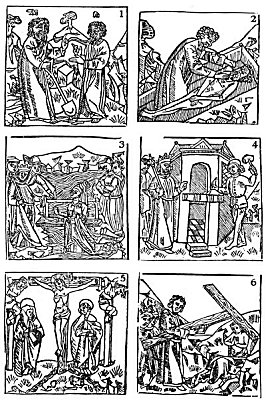
Key ideas
- The wood of Adam's burial became the cross used for Christ's crucifixion, per the Aurea Legenda legend.
- The Tau cross, Crux Ansata, and Roman cross are three universal forms with distinct meanings.
- At least 16 pagan figures, including Mithras and Quetzalcoatl, are linked to crucifixion stories.
- The four arms of the cross represent the four elements: earth, water, fire, and air.
- The letters INRI on the cross mean 'In Nobis Regnat Jesus' to esoteric interpreters.
- The Crux Ansata appears on Easter Island statues, proving its global spread.
- IAdam's DeathThree seeds from the Tree of Life buried in his mouth
- IISeth's QuestVisits Eden; receives the sacred tree from the angel
- IIISolomon's BridgeTree used as bridge; Queen of Sheba kneels before it
- IVBethesda SpringBuried tree produces the healing pool at Jerusalem
- VChrist's CrossSame wood cut into the cross used at Calvary
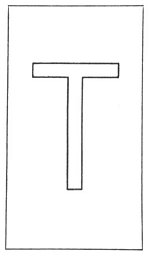
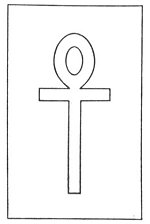
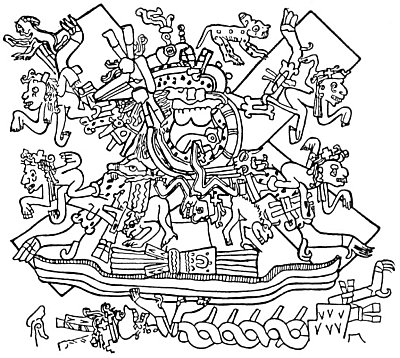
The Mystery of the Apocalypse
A pagan Mystery text hidden inside the Christian Bible
The big ideaHall argues that the Book of Revelation is a pagan Mystery initiation text, its symbols drawn from Eleusinian, Phrygian, and Egyptian rites rather than from Christian revelation.
Hall opens by situating the Apocalypse in Ephesus, a center of pagan learning. He presents three theories about the book's authorship: it is a genuine pagan Mystery text from the Eleusinian or Phrygian Mysteries; it is a deliberate fusion of Christian and pagan symbols by initiated pagans who had joined the early Church; or it is a satirical attack on Christianity. Hall dismisses the third theory and favors the first two. He notes that St. Jerome declared the book susceptible of seven entirely different interpretations.
Hall then decodes the symbolism chapter by chapter. The Alpha and Omega figure combines the attributes of all seven sacred planets: Saturn's white hair, Jupiter's blazing eyes, Mars's sword, Helios's shining face, and so on. The seven churches represent the seven chakras along the spine, the seven sacred planets, and also seven branches of the Aryan race. The four horsemen represent four stages of human life: spiritual birth on the white horse, passionate youth on the red horse, rational maturity on the black horse, and death on the pale horse.
Key numbers carry hidden meaning. The number 144,000 reduces to 9 by Pythagorean digit-addition, the number of initiation. The Beast's number 666 equals the Greek word for the lower mind. The woman clothed with the sun is Virgo and Isis. The New Jerusalem is a perfect cube, the symbol of the regenerated initiate. Hall reads the entire book as a description of the soul's passage through initiation, from descent into matter through the seven planetary spheres to final union with God.
“With the decline of paganism the initiated pagan hierophants transferred their base of operations to the new vehicle of primitive Christianity, adopting the symbols of the new cult to conceal those eternal verities which are ever the priceless possession of the wise.”
Hall's theory of how pagan Mysteries survived inside Christianity
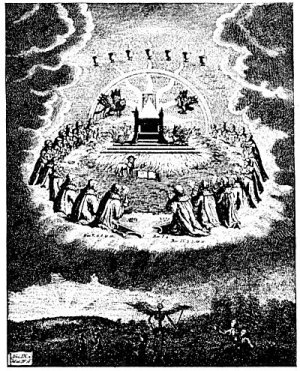
Key ideas
- The Alpha and Omega combines seven planetary attributes: Saturn's hair, Jupiter's eyes, Mars's sword, and others.
- Seven churches match seven chakras along the human spine, from sacral ganglion to crown.
- Four horsemen symbolize birth, youth, maturity, and death in the human life cycle.
- The number 666 equals the Greek term for the lower mind in Pythagorean numerology.
- 144,000 sealed souls reduces to 9 by digit-addition, the number of Mystery initiation.
- The New Jerusalem is a perfect cube with 144 foundation stones in 12 rows, a microcosm of the universe.
- IFirst SealWhite horse, crown and bow; birth and spiritual state
- IISecond SealRed horse, great sword; impetuosity of youth
- IIIThird SealBlack horse, scales; maturity weighing all things
- IVFourth SealPale horse, Death; end of physical life
- VFifth SealMartyrs revealed; souls who died for truth
- VISixth SealEarthquake; 144,000 sealed, reducing to 9
- VIISeventh SealSilence for half an hour; seven angels receive trumpets
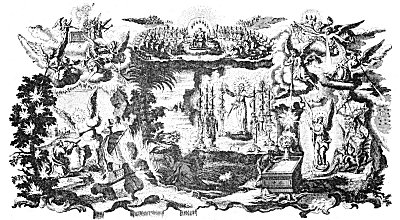
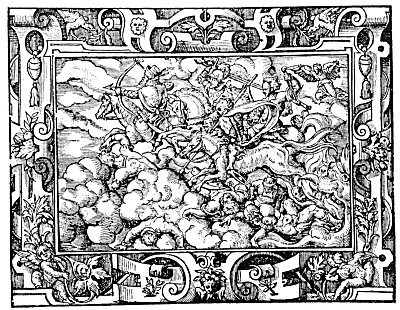
The Faith of Islam
The prophet Western scholarship misrepresented for centuries
The big ideaHall argues that Mohammed was a genuine mystic connected to ancient wisdom traditions, and that Islam produced the most advanced civilization in the world during Europe's Dark Ages.
Hall opens by quoting a 1649 English screed calling the Koran a 'hodgepodge' and Mohammed an impostor, then systematically dismantles this view. He tells Mohammed's life: born in Mecca around 570, he worked in the caravan trade, married a wealthy widow named Khadijah, and received his first revelation from Gabriel on Mount Hira at age 40. When the Meccans plotted to kill him, he fled with Abu Bekr to Medina in the Hegira, the flight from which Islam dates its calendar. He entered Mecca in a bloodless victory eight years later.
Hall defends Mohammed's character using Thomas Carlyle and Washington Irving. Mohammed mended his own clothes, cobbled his own shoes, freed all his slaves before death, hated lying above all vices, and divided his time between God, family, and service to his people. Hall argues the contradictions in the Koran arose from interpolations added 20 years after the Prophet's death, not from Mohammed himself. On women, Hall quotes the Koran directly to show that the charge that Mohammed denied women souls is false.
Hall claims Mohammed had access to ancient Mystery teachings through four possible channels: direct spiritual contact, Nestorian Christian monks, a mysterious holy man, or an older Arabian wisdom school. He ends with a survey of Islamic science: Gerber laid chemistry's foundations in the 9th century, Ben Musa introduced algebra in the 10th, Alhaze studied optics in the 11th, and Avicenna wrote the standard medical encyclopedia of his age. A closing poetic passage traces the phoenix myth through 600-year cycles connecting Pythagoras, Jesus, Mohammed, and Genghis Khan.
“To the discerning few it is evident that Mohammed had a knowledge of that secret doctrine which must needs constitute the core of every great philosophical, religious, or ethical institution.”
Hall's claim that Mohammed was an initiate of the ancient Mysteries
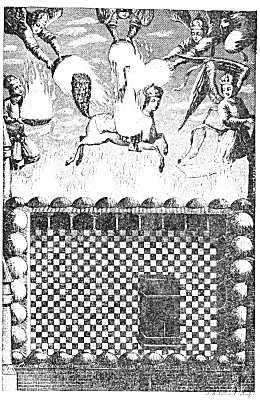
Key ideas
- Gabriel's first revelation came on Mount Hira when Mohammed was 40 years old, in the month of Ramadan.
- The Hegira, Mohammed's flight from Mecca to Medina in 622, is the start of the Islamic calendar.
- The Koran was compiled more than 20 years after Mohammed's death and contains later interpolations.
- Islamic scholars Gerber, Ben Musa, Alhaze, and Avicenna led world science in the 9th-11th centuries.
- The Caaba is an irregular cube about 38 by 35 feet, housing a black aerolite stone said given by Gabriel.
- Friday, the color green, and the crescent all connect Islam symbolically to the planet Venus.
- IFirst HeavenAdam stands at the gate
- IISecond HeavenJohn and Jesus wait here as sisters' sons
- IIIThird HeavenJoseph guards this sphere
- IVFourth HeavenEnoch stands at the gate
- VFifth HeavenAaron is the guardian
- VISixth HeavenMoses waits at the gate
- VIISeventh HeavenAbraham; then the many-veiled God beyond
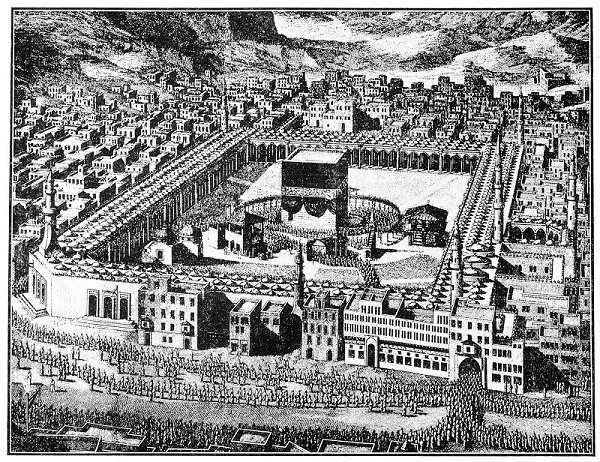
American Indian Symbolism
Ancient Mysteries hidden in forests, codices, and sand
The big ideaHall argues that Native American peoples possessed sophisticated Mystery traditions parallel to those of Egypt and Greece, with the Popol Vuh's seven ordeals proving a shared global initiation system.
Hall describes North American Indians as natural mystics whose cosmology closely matches other ancient systems: a three-tiered world of heaven, earth, and underworld, with the number four as sacred. He finds Mystery cults in Indian traditions, arguing that legends of heroes descending to the Shadow Land while still alive are accounts of initiation rites. The serpent mound in Adams County, Ohio, showing a great reptile disgorging the Egg of Existence, is cited as direct evidence of the secret doctrine in America.
The Midewiwin, or Grand Medicine Society of the Ojibwas, is described as a four-degree initiatory order whose birch-bark records function like Masonic trestleboards. Hall compares it to the Mysteries of every culture: the cross is an important symbol in its rites, healing is taught, and the initiate learns to direct forces through the body's vital centers. He also profiles Hiawatha, a historical Iroquois chief who united five nations into a League centuries before Woodrow Wilson's League of Nations.
Hall's main focus is the Popol Vuh of the Quiche Maya, which he calls the most complete account of Mystery initiation ever set down. The twin heroes Hunahpu and Xbalanque descend into Xibalba and face seven ordeals: house of darkness, house of spears, house of cold, house of tigers, house of fire, and house of bats. Hall connects each ordeal to a zodiac sign and argues the whole story describes the soul passing through the seven sub-zodiacal layers before ascending to spiritual liberation. He also notes that the word America derives from Amaruca, meaning Land of the Plumed Serpent.
“No other sacred book sets forth so completely as the Popol Vuh the initiatory rituals of a great school of mystical philosophy.”
establishing the Popol Vuh as the equal of any ancient Mystery text
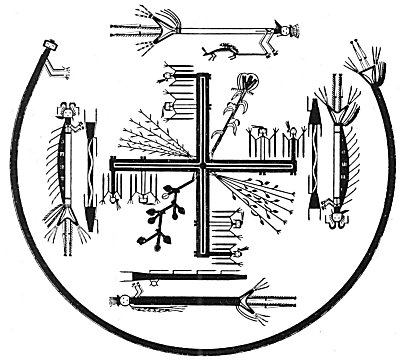
Key ideas
- The serpent mound in Adams County, Ohio, shows the Great Serpent disgorging the Egg of Existence.
- The Midewiwin of the Ojibwas has four degrees and uses birch-bark charts similar to Masonic trestleboards.
- Seven ordeals in Xibalba correspond to seven zodiac signs in Egyptian-Chaldean Mystery traditions.
- Hiawatha formed the League of Five Iroquois Nations, anticipating international arbitration by centuries.
- The word America derives from Amaruca, meaning Land of the Plumed Serpent, in Quiche tradition.
- The Popol Vuh temple contains a sacred black cubical divining stone, parallel to Islam's Caaba at Mecca.
- IHouse of ShadowsTorches and cigars must burn all night unconsumed
- IIHouse of SpearsWarriors attack; four vases of rare flowers required
- IIIHouse of ColdFrozen winds; heroes survive by burning pine cones
- IVHouse of TigersFerocious animals; heroes toss bones and survive
- VHouse of FireFurnace heat; Hunahpu and Xbalanque emerge unburned
- VIHouse of BatsCamazotz decapitates Hunahpu; later magically restored
- VIIFinal VictoryTwin heroes slay the twelve princes of Xibalba
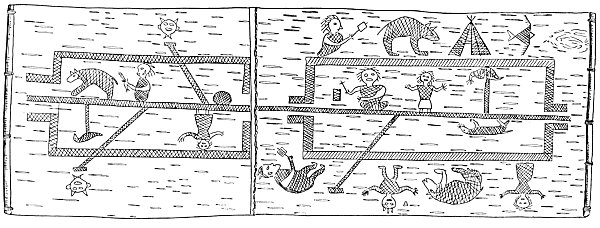
The Mysteries and Their Emissaries
The secret hand behind philosophy, politics, and nations
The big ideaHall argues that a hidden Mystery Brotherhood has guided Western civilization through exceptional emissaries, and that this same Brotherhood played a direct role in founding the United States.
Hall opens by asserting that ancient Mystery school knowledge survived and has been transmitted through exceptional individuals who were frequently persecuted for their efforts. He lists martyred initiates: Pythagoras, Hypatia, Jacques de Molay, Savonarola, Galileo, Bruno, Roger Bacon, Dante, Francis Bacon, and Cagliostro. He then profiles three in depth: Hypatia as the greatest woman philosopher of antiquity, Cagliostro as the most maligned man of modern times, and the Comte de St.-Germain as the most successful modern exponent of ancient wisdom.
Hypatia headed the Neo-Platonic school in Alexandria and was dragged from her chariot and beaten to death with clubs by Christian monks in A.D. 415. The chapter holds Bishop Cyril indirectly responsible. Cagliostro founded an Egyptian Rite of Freemasonry, correctly predicted the French Revolution and the fall of the monarchy, and was imprisoned by the Inquisition on the single charge of trying to found a Masonic lodge in Rome. Hall argues Cagliostro was almost certainly not the criminal Giuseppe Balsamo with whom history confused him.
The Comte de St.-Germain appears as the book's supreme mystery figure: fluent in 12 languages, ambidextrous, able to write identically with both hands simultaneously, claiming 2,000 years of personal memories, and seen across Europe from 1710 to 1822. Hall then connects a Secret Brotherhood to the American founding, describing two episodes: an unknown elder called 'the Professor' who designed the 1775 Colonial flag and then vanished, and an unknown orator who appeared at Independence Hall on July 4, 1776, inspired the signing of the Declaration, and was never identified.
“The Comte de St.-Germain and Sir Francis Bacon are the two greatest emissaries sent into the world by the Secret Brotherhood in the last thousand years.”
Hall's assessment of the Brotherhood's two most effective agents
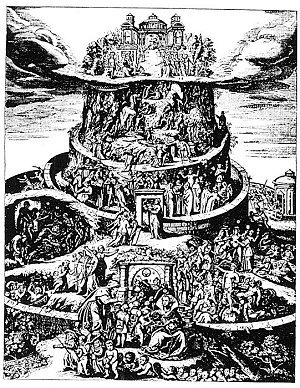
Key ideas
- Hypatia was beaten to death by monks in Alexandria in A.D. 415; Bishop Cyril is held indirectly responsible.
- Cagliostro correctly predicted the French Revolution, the fall of the monarchy, and the fate of the royal family.
- The Comte de St.-Germain used at least eight different names across Europe from 1710 to 1822.
- A mysterious 'Professor' designed the 1775 Colonial flag; Washington and Franklin recognized him.
- An unknown orator appeared at Independence Hall on July 4, 1776, inspired the signing, and disappeared.
- St.-Germain practiced Hindu meditation, was ambidextrous, and had a retreat in the Himalayas.
- IFranklinPhilosopher, Freemason, possible Rosicrucian initiate
- IIThe ProfessorUnknown elder designed the 1775 Colonial flag, then vanished
- IIIWashingtonRecognized the Professor and accepted his flag design
- IVLafayetteMasonic link bridging French support to the new nation
- VJuly 4 OratorUnknown man inspired signing of Declaration, then disappeared
- VINew NationThirteen colonies as vehicle for ancient Mystery school ideals
Conclusion
Philosophy alone can save humanity from itself
The big ideaHall concludes that modern civilization has failed by abandoning ancient philosophical wisdom for materialism, and that only the revival of the Mystery school tradition can redeem humanity.
Hall opens with the story of Aristotle tutoring Alexander the Great, arguing that Aristotle's philosophical influence outlasted Alexander's entire empire. Alexander conquered the physical world with a sword; Aristotle conquered the world of thought, which proved the more durable victory. Hall uses this contrast to argue that minds obey superior intellect not from fear but from recognition of genuine excellence, and that no physical conquest can achieve what philosophy can.
Hall then attacks modern civilization as spiritually bankrupt. In an effort to be true to false standards, men have abandoned their birthright of understanding. Science classifies only physical phenomena. Religion is measured by real estate and balance sheets. Philosophers are dismissed as epileptics. Hall identifies two forms of ignorance: simple ignorance, which is just lack of knowledge and which spurs growth, and complex ignorance, which is ignorance of ignorance, the complacent certainty that nothing more exists beyond the physical senses. He calls the second the greatest danger facing civilization.
Hall ends the book with both a warning and an invitation. He says civilization is moving toward self-destruction, and that from those ruins a new world must be built on the preserved philosophical treasures of the ages. Philosophy is not mere intellectual exercise but the living of a life: right action, right feeling, and right thinking are prerequisites of right knowing. The final sentences are a direct call for the reader to enter the philosophic life, to join those who have chosen knowledge, virtue, and utility as the measure of existence.
“Philosophy reveals to man his kinship with the All. It shows him that he is a brother to the suns which dot the firmament; it lifts him from a taxpayer on a whirling atom to a citizen of Cosmos.”
Hall's summation of philosophy's power to transform human self-understanding
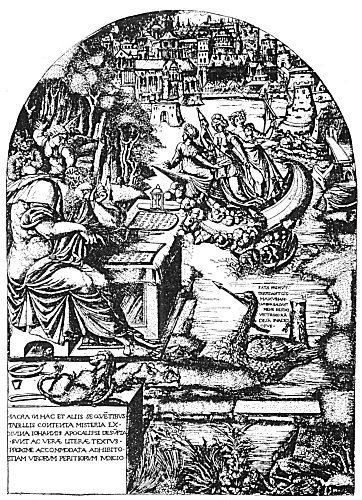
Key ideas
- Aristotle outlasted Alexander because the mind's conquest endures where the sword's conquest fades.
- The Pythagorean school set up headstones for members who abandoned philosophy, treating them as dead.
- Simple ignorance lacks knowledge; complex ignorance does not know it is ignorant, which is far more dangerous.
- Only God possesses wisdom absolutely; human wisdom grows as consciousness expands toward the Whole.
- The philosophic life requires 15 to 20 years of training plus initiation into the ancient Mysteries.
- Hall calls philosophy the sole path that can teach man to be born well, live well, die well, and be reborn.
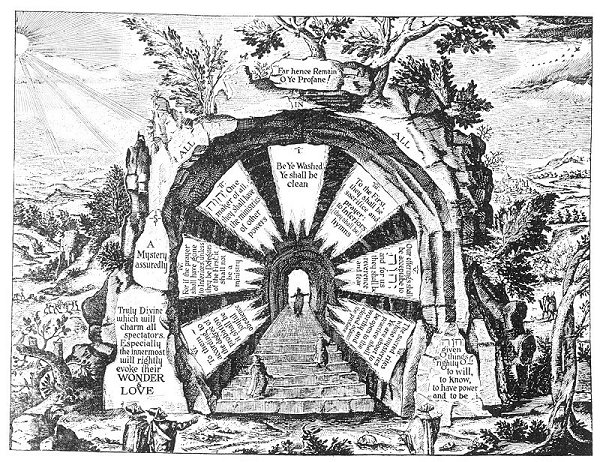
Where it's weak
Handle with care
Hall is a guide to what the esoteric traditions believed, not a reliable guide to what happened. The readers flagged these chapters, where modern scholarship parts ways with the book:
- IntroductionHall's claim that Greek philosophy derived wholesale from Eastern Mystery schools is not supported by mainstream historiography, which treats early Greek thought as largely an independent development with Near Eastern parallels rather than direct transmission.
- The Ancient Mysteries and Secret Societies Whic…Hall's claim that Mithras was born on December 25, crucified, and rose on the third day is not supported by ancient primary sources; these specific parallels were popularized by 18th-century scholar Charles Dupuis and are largely rejected by modern classical scholarship.
- The Ancient Mysteries and Secret Societies, Par…Hall treats Simon Magus as the likely founder of Gnosticism, but modern scholarship views Gnosticism as a diverse movement with multiple independent origins in the 1st and 2nd centuries AD.
- The Ancient Mysteries and Secret Societies, Par…Hall repeats Godfrey Higgins' claim that Bacchus was born on December 25th and resurrected on March 25th, but these specific dates do not appear in ancient Greek sources and are rejected by classical scholars.
- Atlantis and the Gods of AntiquityModern scholars treat Plato's Atlantis as a literary invention, not a historical account; no geological or archaeological evidence supports a mid-Atlantic civilization, and Plato's own dialogues signal that the narrative is allegorical.
- The Life and Teachings of Thoth Hermes Trismegi…Modern scholarship dates the Corpus Hermeticum to the 1st through 3rd centuries CE, not to ancient Egypt; Isaac Casaubon established this in 1614, making Hall's claim of genuinely ancient Egyptian authorship historically untenable.
- The Initiation of the PyramidModern Egyptology holds that the Great Pyramid was built by Pharaoh Khufu around 2560 BCE as a royal tomb; mainstream archaeology finds no evidence of its use as an initiation temple.
- Isis, the Virgin of the WorldHall's claim that Christianity directly borrowed the Isis-Horus image for the Virgin Mary is a popular comparison, but historians note the parallel is one of convergent symbolism; direct borrowing is debated among scholars.
- The Sun, A Universal DeityMost historians of religion see the parallels between solar mythology and Christianity as convergent symbolism rather than direct borrowing; the New Testament was composed independently of Roman solar cult texts.
- The Zodiac and Its SignsModern astronomy confirms the precession of equinoxes at about 25,772 years per full cycle, close to Hall's figure; however, scientific research has not found evidence that zodiac signs influence human personality or destiny.
- The Bembine Table of IsisMost modern scholars date the Bembine Table to the first or second century CE as a Roman decorative piece incorporating Egyptian iconography; it is not considered an authentic ancient Egyptian temple artifact.
- Wonders of AntiquityThe Seven Wonders were compiled by Hellenistic writers for cultural interest; historians find no evidence of systematic planetary assignments or that their architects were members of an esoteric tradition.
- The Life and Philosophy of PythagorasModern scholars consider the detailed biographical parallels between Pythagoras and Jesus to be late legendary accretions; the historical Pythagoras is poorly documented, and most ancient accounts were written centuries after his death.
- Pythagorean MathematicsModern number theory uses the Pythagorean terms (prime, perfect, abundant, deficient) but only as mathematical classifications; the divine attributes and moral meanings Hall describes were philosophical overlays, not properties of numbers themselves.
- The Human Body in SymbolismHall's claim that the New Testament is a coded anatomical allegory of bodily regeneration is an esoteric interpretation; mainstream New Testament scholarship reads these texts as historical and theological documents, not physiological allegories.
- The Hiramic LegendModern Masonic historians acknowledge that the Hiramic legend in its current form dates from 18th-century Freemasonry; the biblical account (1 Kings 7) states that Hiram Abiff completed his work and returned to Tyre, with no mention of murder.
- The Pythagorean Theory of Music and ColorHall himself acknowledges that the blacksmith hammer story is false (hammers cannot produce the claimed intervals); modern acoustics confirms that Pythagorean ratios apply to string length, not hammer weight, making the legend a later invention.
- Fishes, Insects, Animals, Reptiles and Birds (P…Hall's claim that composite mythological animals (sphinx, mantichora, unicorn) were purely symbolic and never thought to be real contradicts the historical record; Aristotle and medieval naturalists treated some of them as actual animals in serious zoological texts.
- Fishes, Insects, Animals, Reptiles and Birds (P…Hall's claim that the original Great Seal bird was a phoenix is disputed; most historians consider the design intended as a bald eagle, though early drawings do differ notably from the modern version.
- Flowers, Plants, Fruits, and TreesHall presents the Holy Grail origin story as genuine tradition, but scholars generally trace the Grail legend to 12th-century medieval literary invention, primarily Chretien de Troyes, with no historical basis.
- Stones, Metals and GemsHall's table of planetary metal and gem correspondences derives from Renaissance occultism; modern chemistry does not recognize any physical or medicinal relationship between planetary bodies and terrestrial metals or gemstones.
- Ceremonial Magic and SorceryHall presents the Scarlet Council of Atlantean sorcerers as a historical institution operating in ancient Egypt. No archaeological or textual evidence supports the existence of Atlantis or an organized Atlantean magical tradition.
- The Elements and Their InhabitantsParacelsus drew his elemental theory from Neoplatonic philosophy, not observation. Modern science does not recognize gnomes, undines, salamanders, or sylphs as living beings, or an etheric counterpart to physical elements.
- Hermetic Pharmacology, Chemistry, and Therapeut…Hall's claim that germs are born from evil thoughts contradicts established germ theory; pathogenic microorganisms are independent entities whose existence was demonstrated by Pasteur and Koch in the 19th century.
- The Qabbalah, the Secret Doctrine of IsraelModern scholars date the Sepher Yetzirah to between the 3rd and 6th centuries AD, not to Abraham or the biblical patriarchs as Qabbalistic tradition claims.
- Fundamentals of Qabbalistic CosmogonyThe Qabbalistic claim that Moses passed forty-nine of the Fifty Gates has no basis in canonical Hebrew scripture; it originates in later mystical texts compiled centuries after his time.
- The Tree of the SephirothThe Sephirothic Tree in its familiar form dates to medieval Jewish mysticism of the 12th to 13th centuries, not to antiquity; scholars trace the ten Sephiroth as a formal system to texts like the Bahir (c. 1175 AD).
- Qabbalistic Keys to the Creation of ManThe claim that Elohim proves polytheism is disputed; many scholars interpret the plural as a grammatical plural of majesty common in ancient Semitic languages, not as evidence of multiple gods.
- An Analysis of Tarot CardsNo historical evidence links the Tarot to ancient Egypt or the Knights Templars; the earliest documented Tarot decks appear in northern Italy in the 1440s, created as illustrated card games for the nobility.
- The Tabernacle in the WildernessModern archaeology has not confirmed a Tabernacle structure matching the biblical description; most scholars view the Exodus account as composed or redacted centuries after the events it describes, reflecting later Temple theology.
- The Fraternity of the Rose CrossNo historical city called Damcar has been identified in Arabia, and no verified records of Christian Rosencreutz exist outside the Fama Fraternitatis itself, which most scholars date to around 1614.
- Rosicrucian Doctrines and TenetsModern historians have found no credible evidence that Rosicrucians organized or funded the American Revolution; the Great Seal's design is traceable to Franklin, Adams, and Jefferson drawing on standard heraldic sources.
- Alchemy and Its ExponentsModern chemists consider elemental transmutation by chemical means impossible; it requires nuclear reactions. Raymond Lully's biography contains many apocryphal elements, and no authentic transmutation has been independently verified.
- The Theory and Practice of Alchemy: Part OneThe Emerald Tablet attributed to Hermes Trismegistus is generally dated by scholars to between the 6th and 8th centuries CE, not to ancient Egypt; its earliest known Arabic text appears around 800 CE.
- The Theory and Practice of Alchemy: Part TwoMost modern historians of science classify the Emerald Tablet as a pseudo-Hermetic medieval Arabic text with no proven connection to ancient Egypt or to any historical figure named Hermes Trismegistus.
- The Hermetic And Alchemical Figures of Claudius…Hall's claim that this manuscript belongs to the most important Rosicrucian documents rests solely on an anonymous annotator's note; no independent historical evidence connects it to known Rosicrucian doctrine.
- The Chemical MarriageModern scholars view The Chemical Marriage as a literary fantasy or satire; Andreae himself called it a ludibrium (jest) and denied any serious initiatory intent, which contradicts Hall's reading of it as a genuine Rosicrucian ritual document.
- Bacon, Shakspere, and the RosicruciansModern cryptographers, including William and Elizebeth Friedman in their 1957 study, found no consistent hidden messages in the Shakespeare folios; the cipher evidence Hall cites has been thoroughly refuted by professional analysts.
- The Cryptogram as a Factor in Symbolic Philosop…Professional cryptographers have found no consistent hidden messages in the Shakespeare folios using any of the methods Hall describes; the biliteral decipherment requires pre-selection of wheel-cipher settings, making the results unfalsifiable.
- Freemasonic SymbolismModern Masonic historians trace operative masonry to medieval European stonemasons' guilds; the claimed connection to the Dionysiac Architects is Hall's inference, and no documentary evidence directly links the two organizations.
- Mystic ChristianityModern scholars trace the Arthurian legends to Geoffrey of Monmouth's 1138 Historia and the Grail story to Chretien de Troyes around 1190; no historical evidence connects either to a secret initiatory order or to early Christianity.
- The Cross and the CrucifixionHall's claim that Mithras was crucified and rose on March 25 is disputed by modern scholars, who find no pre-Christian textual or archaeological evidence for Mithraic crucifixion or resurrection.
- The Mystery of the ApocalypseModern biblical scholars generally date Revelation to around A.D. 95 under Emperor Domitian and attribute it to a Jewish-Christian author; the Eleusinian Mystery origin Hall proposes lacks textual support in academic scholarship.
- The Faith of IslamModern historians view the Koran as substantially authentic to Mohammed's lifetime and compiled under Caliph Uthman around 650 A.D.; the view that it is primarily a later interpolation is not supported by mainstream Islamic scholarship.
- American Indian SymbolismThe etymology linking America to Amaruca (Land of the Plumed Serpent) is an esoteric claim rejected by mainstream etymologists, who trace America to Italian explorer Amerigo Vespucci.
- The Mysteries and Their EmissariesNo historical evidence supports the Professor who designed the flag or the unknown Independence Hall orator; these accounts originate in 19th-century esoteric literature and are absent from contemporary historical records.
If you only read three chapters
Start with Pythagoras (12), the Tree of the Sephiroth (26) and the Theory and Practice of Alchemy (34). Together they give you the number, map and method that the rest of the book keeps returning to.
Source: the sacred-texts.com etext of the 1928 first edition (public domain, copyright not renewed), prepared by J. B. Hare, 2004. Every chapter was read in full from that text. Engravings are the book's own black-and-white illustrations; the color plates by J. Augustus Knapp are not in the etext and are not shown. Summaries report what Hall claims; they are not endorsements of those claims.